Secondary International Schools in Bangkok
Secondary school is where the stakes rise. The choices made at 11 and 14 — which school, which curriculum, which subjects — shape university options and, to a real degree, careers. Bangkok is a good place to face those choices: the city offers every major examination pathway at multiple price points, in schools with long records of sending graduates to universities around the world. This guide explains how the pathways differ and how to match one to your teenager.
Quick answer
Compare Bangkok secondary schools: IGCSE, A-Level, IB Diploma and American AP pathways, age ranges, university preparation and THB fees.
At a glance
- City: Bangkok
- Sections: 9
- Questions answered: 8
- Schools listed: 9
- Read time: 10 min read
The shape of secondary: two decisions, not one
Bangkok's secondary schools are organised around two forks. The first comes at around 14, when students begin two-year examination courses: IGCSE in the British-system schools, the IB Middle Years Programme in the continuum schools, or high-school credit courses in the American ones. The second comes at 16, when the real divergence happens — A-Levels, the IB Diploma, or the American High School Diploma with AP.
Understanding which fork a school offers, and when, is the foundation of a sensible shortlist. A child at Harrow will take IGCSEs and then choose A-Level subjects; a child at Bangkok Patana takes IGCSEs and then moves into the IB Diploma; a child at NIST or KIS stays inside the IB throughout; a child at ISB builds an American transcript and can add AP courses or switch to the IB Diploma. Four genuinely different teenage experiences, all available within one city.
The British examination pathway: IGCSE to A-Levels
The IGCSE years (roughly ages 14–16) give breadth: typically eight to ten subjects examined at 16, with English, maths and sciences at the core. Harrow, Charter, Brighton College, Wellington College and Amnuay Silpa — the last within a Thai–UK bilingual model — all run this pathway, and it transfers cleanly if your family moves to another British-curriculum school anywhere in the world.
After IGCSE, schools split. Harrow, Charter, Brighton and Wellington continue to A-Levels: three or four subjects studied in depth for two years, the traditional route into UK universities and increasingly well understood in the US, Europe and Asia. A-Levels suit students who know their strengths and want to go deep — a future engineer taking maths, further maths and physics, or a future medic taking chemistry and biology. Bangkok Patana and Shrewsbury instead move their students into the IB Diploma at 16, keeping breadth alive for two more years.
The IB Diploma: breadth with a deadline
The IB Diploma is a fixed two-year programme: six subjects — three or four at higher level — plus theory of knowledge, an extended essay and creativity-activity-service requirements. It is demanding in a particular way: not the depth of A-Levels, but a relentless breadth that rewards organised, steady students and punishes procrastination. Universities worldwide know exactly what it is, and strong Diploma scores open doors everywhere.
In Bangkok, KIS and NIST run the full IB continuum, so their students grow up inside the IB's inquiry-based approach. Bangkok Patana and Shrewsbury students arrive at the Diploma from IGCSE — a transition the schools manage deliberately, and one many families prefer: a structured, content-rich lower secondary education followed by the IB's breadth at 16. International School Bangkok offers the Diploma as an alternative to its American pathway.
The American pathway: credits, GPA and AP
International School Bangkok and BASIS represent the American model: no single leaving exam, but a four-year high-school transcript of credits and a Grade Point Average that US universities read fluently. Advanced Placement courses — university-level classes in individual subjects, examined each May — let strong students prove depth in the areas they care about, and US universities often grant credit for good AP scores.
BASIS builds its entire upper-school model around AP, with an academically intense reputation that suits ambitious, self-driven students. ISB offers a broader American experience with selected AP courses and the option of the IB Diploma in the final two years. For families expecting to return to the US system, or aiming at American universities, this pathway keeps every door open.
Not sure which schools fit your family?
Choosing an international school depends on your child's age, curriculum preference, location and budget. Tell us what you're looking for and we'll help you identify schools worth considering.
Subject choice: the detail that decides fit
Two schools offering “the IB Diploma” or “A-Levels” are not offering the same education. What differs is the subject menu actually timetabled: the languages available, whether further maths runs, which sciences can be combined, whether economics, psychology, computer science or theatre are on offer. Smaller schools necessarily run smaller menus.
Before accepting a place, ask for the actual subject blocks for your child's cohort — not the prospectus list — and check that your child's intended combination fits. This matters most for students with specific university goals: a child aiming at medicine needs particular sciences; one aiming at engineering needs maths and physics; one aiming at a competitive art school needs a portfolio-friendly timetable. Confirm the combination exists before you commit.
University preparation: what good looks like
Bangkok's established secondary schools take university counselling seriously, and the results show in destination lists spanning the UK, US, Australia, Europe and Asia. Good provision starts early — course-planning conversations at 14, not a panic at 17 — and includes support with personal statements, essays, admissions tests, interviews and the logistics of applying across multiple countries.
Ask each school how many counsellors serve each year group, when formal guidance begins, and for its recent university destination list. Then ask the harder question: how the school supports a student whose goals change, or whose results come in below expectation. The quality of the answer tells you whether counselling is a genuine strength or a brochure line.
Transferring schools during the secondary years
Internationally mobile families rarely control their timing, and Bangkok's schools are used to arrivals at awkward moments. The clean transfer points are the start of the IGCSE years and the start of the final two-year programmes; mid-course arrivals in examination years are genuinely difficult, and many schools decline them for the child's sake.
If a move is on the horizon, tell the school early and ask how it handles leavers and joiners mid-course. Keep copies of transcripts, course descriptions and predicted grades — the receiving school will need them for placement. And if your child is part-way through IGCSEs, ask both schools how the examination boards and subject options align; a well-managed transfer can preserve nearly all of a student's work.

Accreditation and inspection: the external check
Secondary school marketing is confident everywhere, so anchor your judgement in external validation. Look for accreditation from CIS, WASC, NEASC or EDT alongside Thai Ministry of Education licensing, and check examination-centre status directly: Cambridge and Oxford AQA publish centre registers, and the IB Organization lists every authorised Diploma school on its website. A school claiming a pathway it is not yet authorised to run is a genuine risk in the examination years.
Published results deserve the same scrutiny. Ask for three years of IGCSE, A-Level, IB or AP outcomes — not one cherry-picked cohort — and ask how many students sat the examinations. A 100% pass rate across eight candidates means something different from the same figure across eighty.
Choosing well: a teenager-inclusive process
By secondary age, your child is a stakeholder, not a passenger. The school they feel committed to is the school they will work for, so build the shortlist together and let them lead the questions on visits — about subjects, sport, music, friends, the feel of the place. Your job is the due diligence: fees, university outcomes, subject blocks, pastoral support and the commute.
On pastoral support, ask specifically how the school handles the pressure of examination years — workload management, wellbeing provision, and what happens when a student struggles academically or emotionally. The secondary years in any system are demanding; the schools that serve teenagers best are the ones honest about that, with visible structures to help.
Frequently Asked Questions
What qualifications can my child take at a Bangkok secondary school?
The four main pathways are IGCSE followed by A-Levels (Harrow, Charter, Brighton, Wellington), IGCSE followed by the IB Diploma (Bangkok Patana, Shrewsbury), the full IB continuum (NIST, KIS), and the American High School Diploma with AP courses (International School Bangkok, BASIS). All are recognised by universities worldwide — the choice is about how your child learns best.
A-Levels or the IB Diploma: which is better?
Neither is universally better. A-Levels let a student specialise in three or four subjects they love — ideal for early specialists and for UK university entry. The IB Diploma keeps six subjects plus core requirements — ideal for organised all-rounders and for keeping international options open. Bangkok offers both at multiple schools, so choose on your child's profile, not on availability.
How much do Bangkok secondary schools cost?
Secondary years sit at the top of each school's fee range. Listed whole-school ranges include Charter at THB 292,500–612,000, Amnuay Silpa at THB 491,300–636,800, KIS at THB 440,100–984,700 and International School Bangkok at THB 659,000–1,197,000. Ask for the fee for your child's actual year group, and remember examination entry fees come on top in the final years.
Can my child transfer into a Bangkok secondary school mid-course?
Transfers are straightforward in the early secondary years and at natural break points (start of Year 10/IGCSE, start of the Diploma or A-Level years). Joining halfway through a two-year examination course is much harder — schools rarely allow it, because the coursework and subject blocks are already set. Time a move for the start of a programme wherever possible.
Which Bangkok schools offer the IB Diploma?
KIS International School and NIST offer the full IB continuum. Bangkok Patana and Shrewsbury run British lower schools through IGCSE and then the IB Diploma in the sixth form. International School Bangkok offers the IB Diploma alongside AP courses. Check which subjects each school actually timetables at higher level — the published list and the running courses can differ.
Do all Bangkok secondary schools go through to age 18?
No. Traill International School, for example, lists ages 2–15, so a child there would need to move for the final examination years. Check each school's upper age and final qualification before applying, and if a move at 15 or 16 is likely, plan it as part of the original decision rather than discovering it later.
How do Bangkok schools support university applications?
The established schools have dedicated university counsellors who guide course selection from around age 14, support applications to the UK (UCAS), US (Common App), Australia, Europe and Asia, and prepare students for admissions tests and interviews. Ask each school about counsellor-to-student ratios and recent destination lists — the specificity of the answer is telling.
What should I ask about subject choices?
Ask for the actual subject blocks for the coming year, not the catalogue. Smaller cohorts mean some listed subjects may not run, and specific combinations — higher-level physics with economics, say — may clash on the timetable. If your child's heart is set on a particular combination, confirm it before accepting a place.
International schools in British and bilingual examination pathways
- Shrewsbury International School Bangkok
- Harrow International School Bangkok
- Charter International School
- Amnuay Silpa School
International schools in IB and American pathways
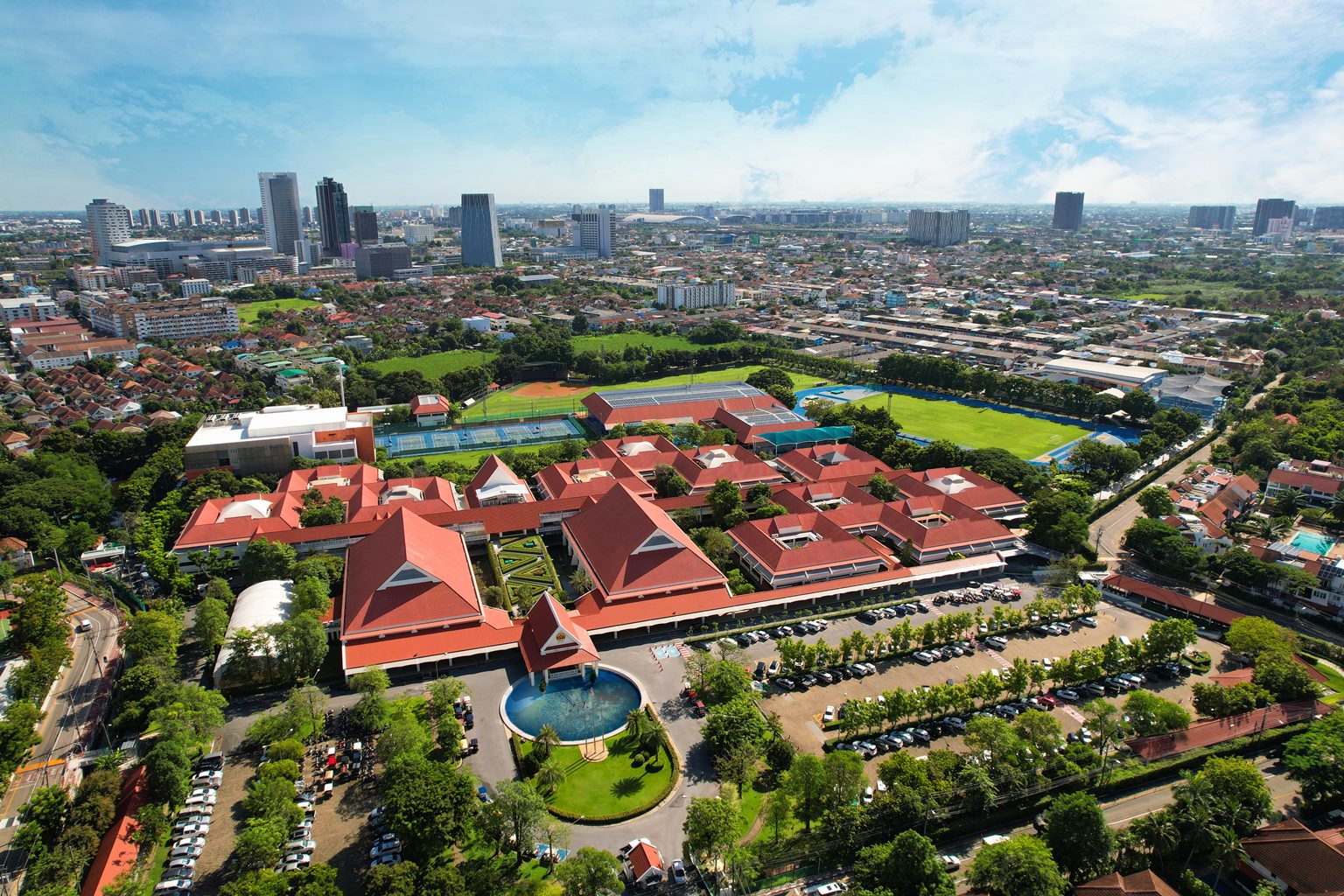
- International School Bangkok
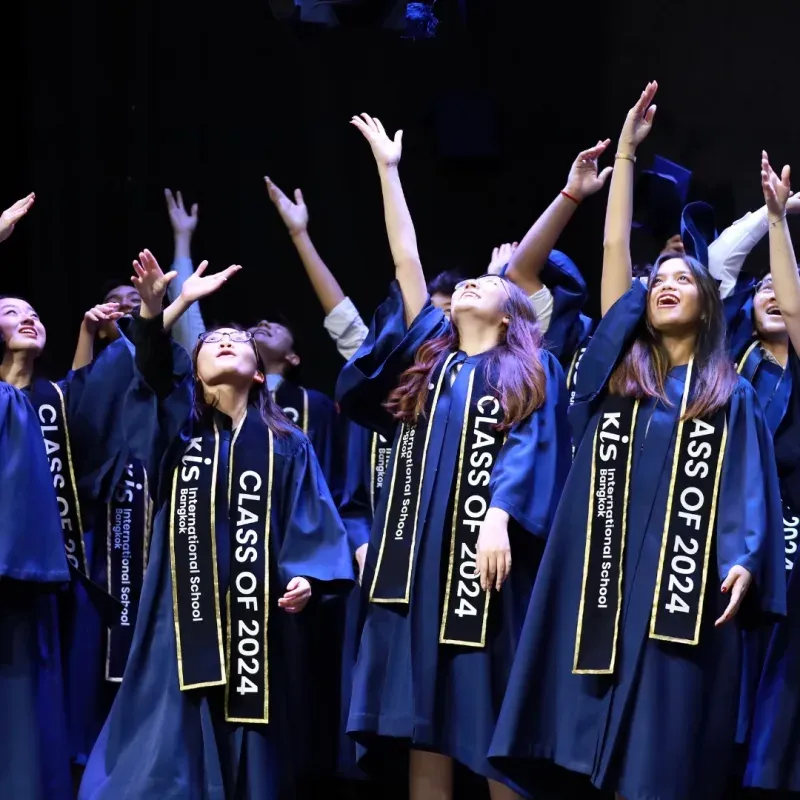
- KIS International School
- Bangkok Patana School

- BASIS International School Bangkok

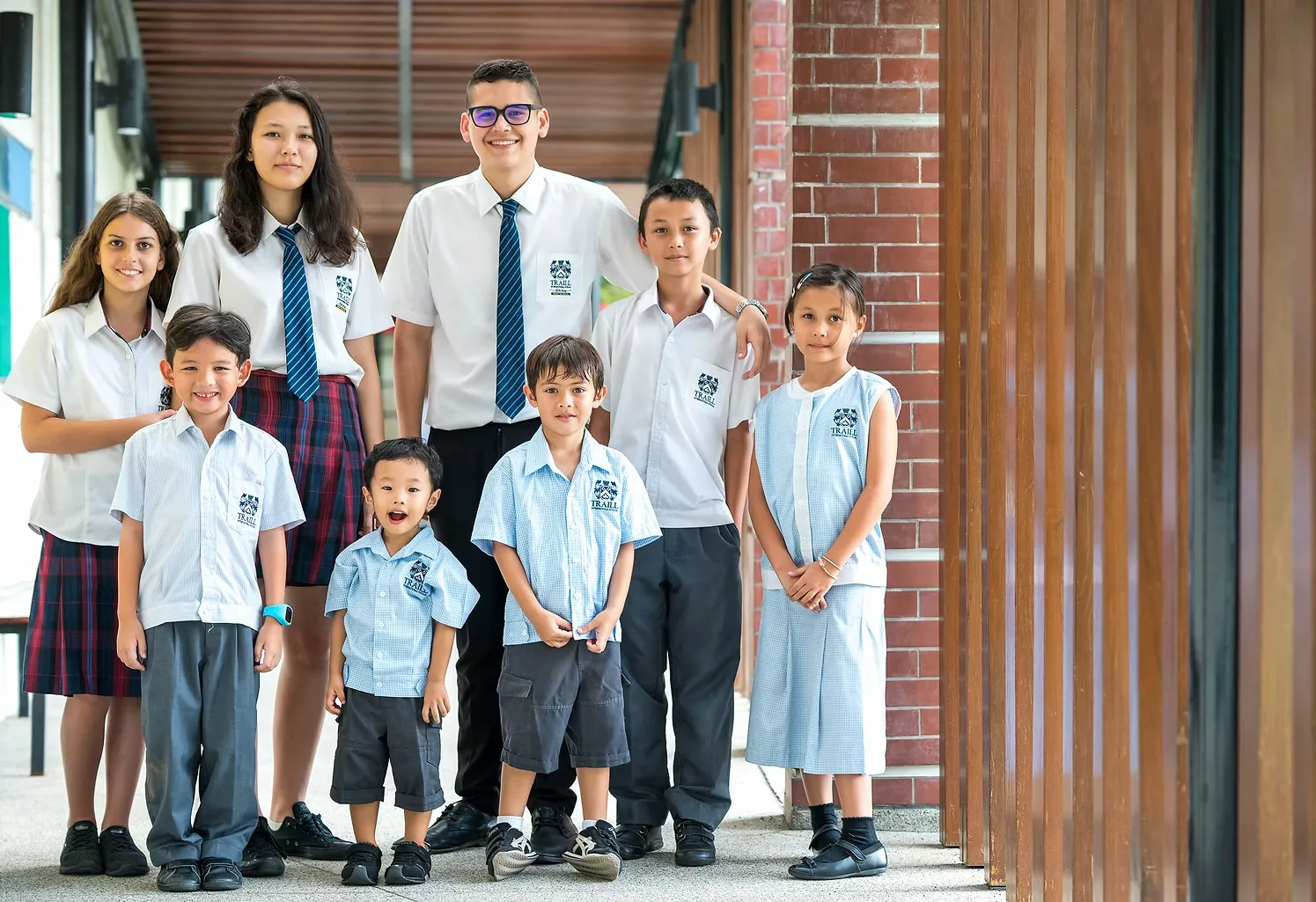
- Traill International School
Comparing Bangkok secondary pathways?
Tell us your child's age, current programme and intended qualification, and we'll help you identify the schools worth visiting.
Related guides
- International Schools in Bangkok: A Parent's Guide
- Bangkok International School Fees 2026: What It Really Costs
- How to Apply to an International School in Bangkok
- IB Schools in Bangkok: How to Choose the Right One
- British Schools in Bangkok: Curriculum, Fees and How to Choose
- Best Areas of Bangkok for Expat Families: Schools, Commutes and Housing
- American Schools in Bangkok: Curriculum, Fees and How to Choose
- European Curriculum Schools in Bangkok: French, German/Swiss and British Pathways
- Best International Schools in Bangkok: A Parent's Guide to Choosing Well
- Nurseries and Early Years in Bangkok: A Parent's Guide