Nurseries and Early Years in Bangkok
Bangkok is a wonderful city for young families, and its early-years provision is correspondingly rich — but the choice can feel bewildering when you are new to it. British EYFS kindergartens, Montessori houses, Reggio Emilia-inspired settings and the early-years wings of the big through-schools all promise a happy start, and most deliver it. The differences that matter are practical: the age your child can start, the philosophy in the classroom, whether the setting leads naturally into a primary school, and — in Bangkok above all — how far it is from home.
Quick answer
Compare Bangkok nurseries and early-years settings: Montessori, Reggio Emilia and EYFS, through-school options, THB fees and how settling in works.
At a glance
- City: Bangkok
- Sections: 7
- Questions answered: 8
- Schools listed: 9
- Read time: 9 min read
Start with your child, not the brochure
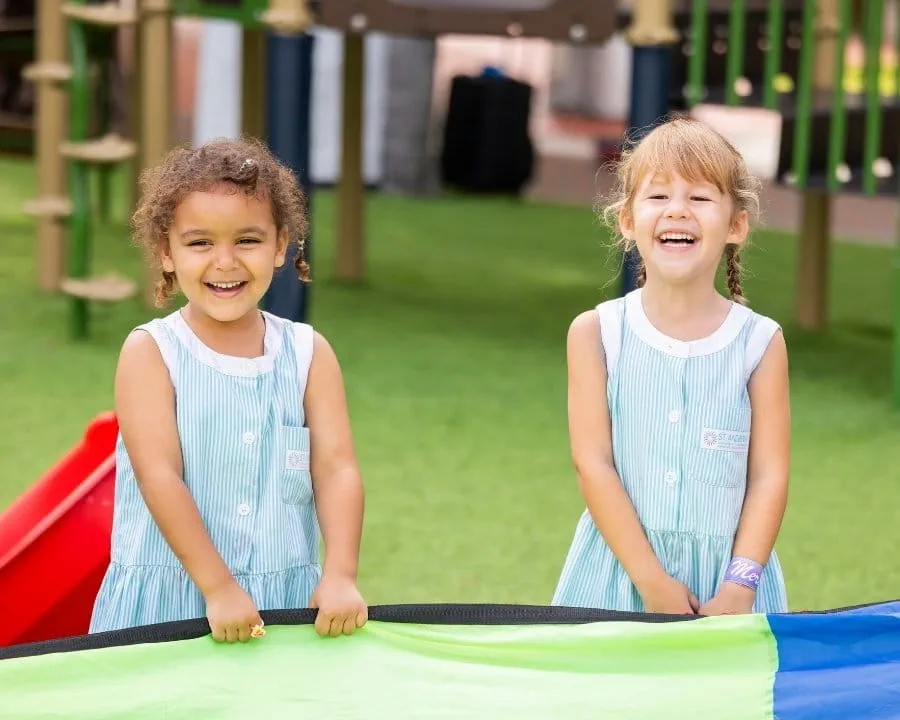
At two or three years old, the differences between curricula matter far less than the quality of care. What your child needs is a small number of consistent, warm adults, plenty of play, outdoor time, and a day paced for a toddler rather than a timetable borrowed from older children. Every setting in this guide can provide that; the question is which one's particular flavour suits your child and your family.
Think about temperament. A confident, sociable three-year-old may thrive in the bustle of a large through-school early-years centre. A child who finds noise and crowds overwhelming may settle faster in a small kindergarten where the same few teachers greet them every morning. Neither is better — they are just different children.
EYFS, Montessori and Reggio Emilia: what the labels mean in practice
The British Early Years Foundation Stage — used at ABC Pathways, BEYC and within the early-years sections of Harrow, St Andrews and the other British schools — is a play-based framework with gentle structure: seven areas of learning, from communication and physical development to early literacy and maths, tracked through observation rather than tests. It leads naturally into the English National Curriculum at age five.
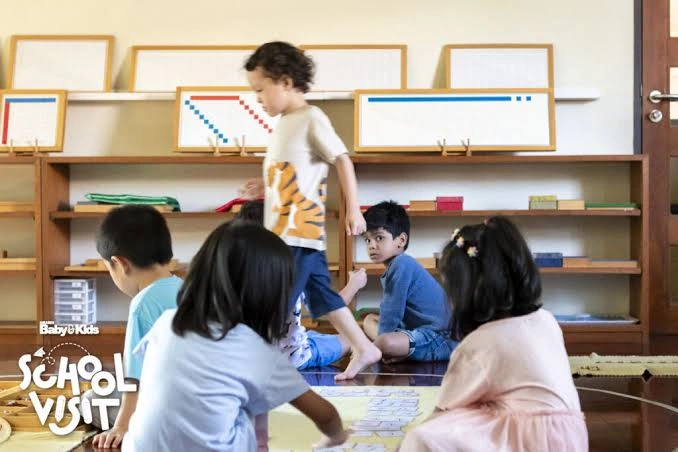
Montessori, at John Wyatt, works differently: children choose their own activities from carefully prepared materials, work at their own pace, and learn in mixed-age groups where older children help younger ones. Reggio Emilia, the inspiration at BEYC and Shrewsbury City Campus, treats the environment itself as a teacher and builds long-term projects around the children's own questions. Visit all three types if you can — the philosophies feel very different in the room, and you will know quickly which one fits your child.
Through-school nurseries: the continuity question
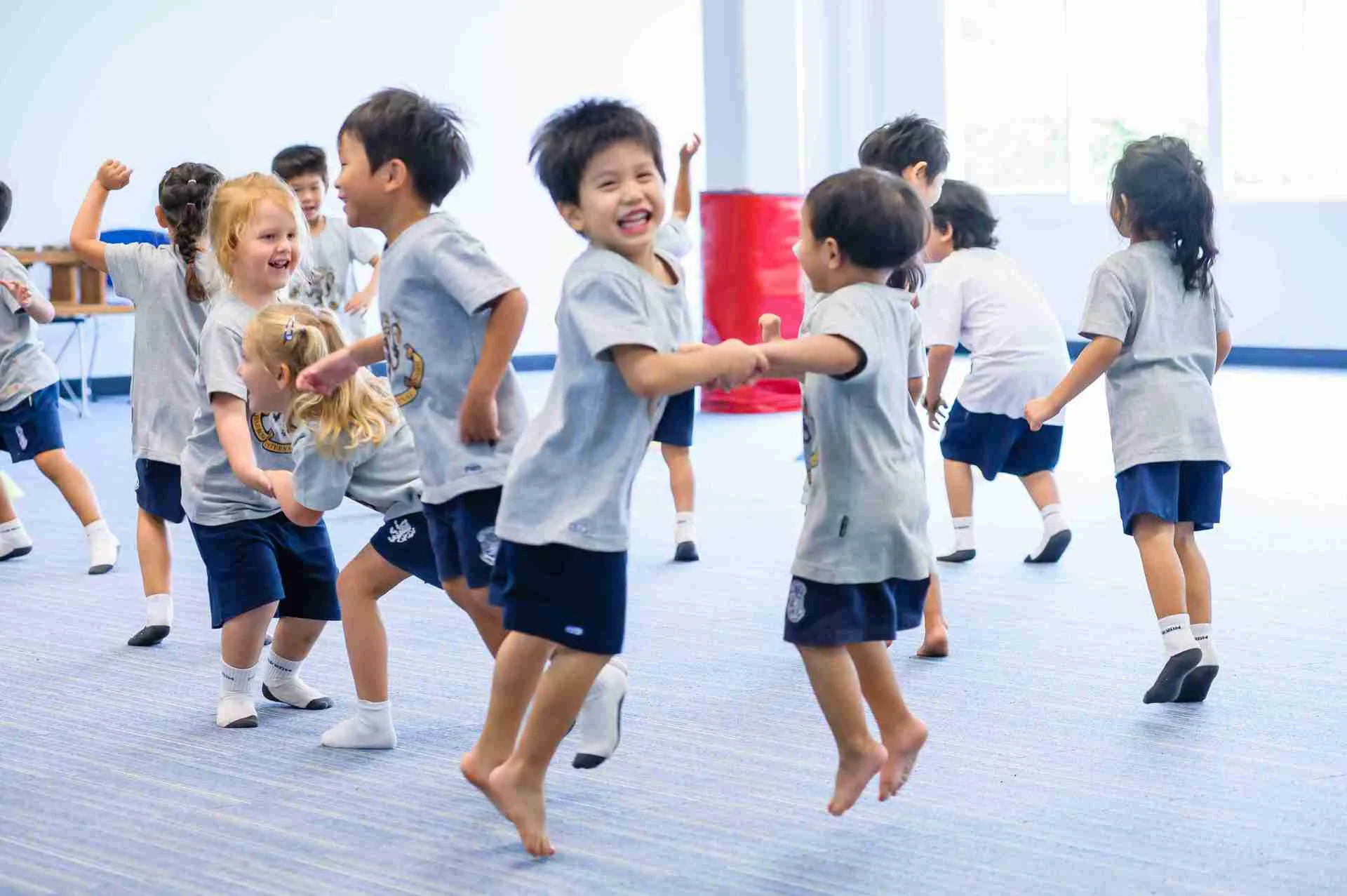
St Andrews International School Bangkok takes children from age 2 on its city campus and carries them through to 18 with a British curriculum and the IB. Harrow starts even earlier, at age 1, on its lakeside campus, following EYFS through IGCSE to A-Levels. Bangkok Patana and Brighton College both welcome two-year-olds into early-years centres that feed directly into their primary schools.
The appeal is obvious: one admissions process, one community, no disruptive move at five or seven. The caveats are worth asking about too. Progression from nursery to reception is usually streamlined but rarely contractually guaranteed, and a large campus can feel big for a small child — though the better schools run their early-years centres as deliberately self-contained worlds within the school.
Not sure which schools fit your family?
Choosing an international school depends on your child's age, curriculum preference, location and budget. Tell us what you're looking for and we'll help you identify schools worth considering.
Dedicated early-years settings
Bangkok's standalone kindergartens offer something the big schools cannot: small scale. ABC Pathways International Kindergarten follows British EYFS from pre-kindergarten to K3 at THB 200,000–395,000 a year. BEYC combines EYFS and Key Stage 1 with a Reggio Emilia approach through to Year 1. Kids' Academy's Discovery Campus covers nursery to kindergarten at THB 116,000–518,700, and John Wyatt Montessori runs its Montessori programme for ages 3–12 — one of the few settings that carries the Montessori approach into the elementary years.
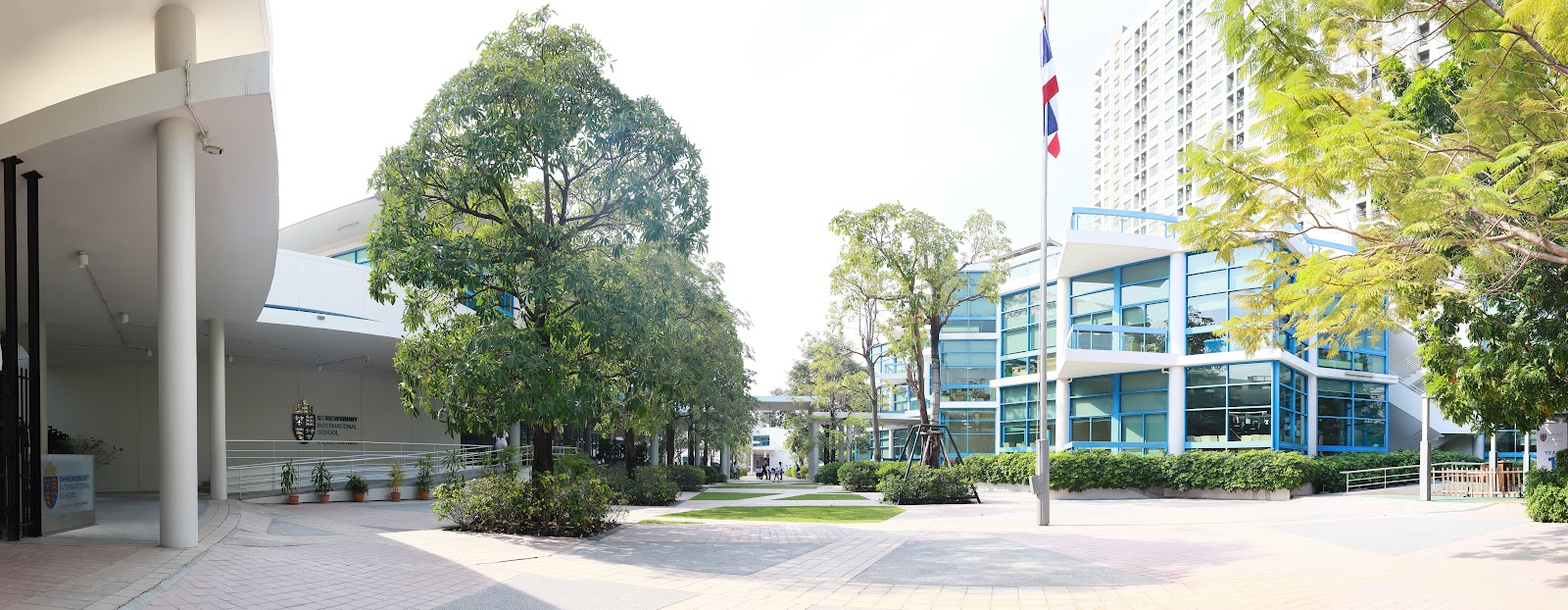
Shrewsbury's City Campus sits between the two worlds: a dedicated early-years and primary campus for ages 2–11 with the resources of the Shrewsbury name behind it, listing THB 696,300–944,700. If you choose a setting that ends at kindergarten or Year 1, start thinking about the next school early — popular primary entry points fill well ahead.
What fees look like at this age
Early-years fees in Bangkok are often more flexible than the headline annual figures suggest. Many settings offer half-day or part-week options for the youngest children, priced below the full-time rate, so ask for the schedule you actually want rather than comparing full-time figures you may not need.
Within the listed ranges, the lower figure is typically the nursery years and the upper figure the oldest group the setting covers — Harrow's THB 146,300–1,063,000, for instance, spans from its youngest provision right through to sixth form. Ask each setting for a written quote for your child's age group and attendance pattern, including meals, snacks and any compulsory extras.
Settling in, safety and staying in touch
The best Bangkok settings treat settling in as a process, not an event: short first sessions with a parent nearby, gradually extending over one to three weeks, with a named key person who knows your child and updates you daily. Ask exactly how this works, what happens if a child is still distressed after a fortnight, and how the setting communicates — many now use apps with photos and daily notes, which make the separation much easier on parents too.
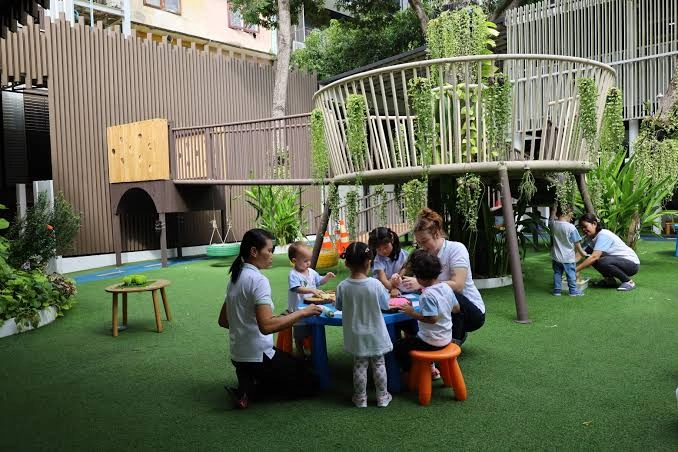
On safety, check the practical things: secure entry, sign-out procedures, staff vetting, first-aid cover and how the setting handles Bangkok's heat and air-quality days for outdoor play. Good settings welcome these questions; be wary of any that seem impatient with them.
Planning the move to primary
If your setting ends at kindergarten or Year 1, the primary application clock starts earlier than most parents expect. Popular reception and Year 1 entry points at the through-schools can fill a year ahead, so begin enquiries while your child is still happily settled in nursery rather than in the final term.
Ask your nursery which schools its children typically move on to — experienced Bangkok kindergartens know the landscape intimately and can tell you honestly which primaries suit which children. And keep the commute in the decision from the start: a five-year-old's school run sets the shape of your family's day for years.
Frequently Asked Questions
At what age can my child start nursery in Bangkok?
Bangkok's international settings start remarkably early. Harrow accepts children from age 1, and Bangkok Patana, St Andrews and Brighton College from age 2. Dedicated kindergartens such as ABC Pathways take children from pre-kindergarten. The right starting age depends on your child — many families begin with two or three mornings a week rather than full days.
What is the difference between Montessori, Reggio Emilia and EYFS?
EYFS is the British early-years framework: play-based learning with structured goals across seven areas of development. Montessori uses self-directed activity with specially designed materials in mixed-age classrooms. Reggio Emilia treats the environment as a teacher and follows children's interests through long-term projects. All three can be excellent; visit to see which philosophy feels right for your child.
Should I choose a standalone nursery or a school with an early-years section?
A through-school nursery (Harrow, Bangkok Patana, St Andrews, Brighton) offers continuity — your child can stay until 18 without another admissions process. A standalone setting (ABC Pathways, BEYC, Kids' Academy) often provides a smaller, more intimate environment, but you will need to apply again for primary. If you expect to stay in Bangkok for years, continuity has real value.
How much do Bangkok nurseries and kindergartens cost?
Listed annual fees range widely: Kids' Academy Discovery Campus lists THB 116,000–518,700 and ABC Pathways THB 200,000–395,000, while early-years places at the large through-schools sit within wider ranges such as Harrow's THB 146,300–1,063,000. BEYC and John Wyatt Montessori list fees on request. Part-time and half-day options often cost less — ask for the exact schedule you need.
Will my child need to speak English before starting?
No. Bangkok's international early-years settings are used to children arriving with no English at all, and at this age children absorb the language through play remarkably quickly. Do ask how the setting supports home languages and how it communicates with parents whose English is limited.
How do Bangkok nurseries handle settling in?
Most use a graduated settling period — short sessions with a parent present, building up over one to three weeks. Ask each setting for its exact settling policy, the staff-to-child ratio in your child's room, and who your child's key person will be. A good setting will have clear, confident answers.
What should I look for on a nursery visit?
Watch whether children look busy and content, whether staff get down to eye level when they speak, and how much outdoor time the day includes. Ask about staff turnover — consistency of caregivers matters enormously at this age — and check sleep, food and toilet-training arrangements against your family's routines.
Does attending a school's nursery guarantee a primary place?
Not automatically. Most through-schools give nursery children priority or a streamlined transition into reception, but policies differ and popular year groups can still be competitive. Ask each school explicitly how the nursery-to-primary transition works before assuming continuity is guaranteed.
International schools in Through-schools with nursery entry
- St Andrews International School Bangkok

- Harrow International School Bangkok
- Bangkok Patana School
- Brighton College Bangkok
International schools in Dedicated early-years settings
- ABC Pathways International Kindergarten
- BEYC International School
- Kids' Academy International School — Discovery Campus
- John Wyatt Montessori — Bangkok Campus
- Shrewsbury International School City Campus
Building a Bangkok nursery shortlist?
Tell us your child's age, the approach you prefer and where you expect to live, and we'll help you find settings worth visiting.
Related guides
- International Schools in Bangkok: A Parent's Guide
- Bangkok International School Fees 2026: What It Really Costs
- How to Apply to an International School in Bangkok
- IB Schools in Bangkok: How to Choose the Right One
- British Schools in Bangkok: Curriculum, Fees and How to Choose
- Best Areas of Bangkok for Expat Families: Schools, Commutes and Housing
- American Schools in Bangkok: Curriculum, Fees and How to Choose
- European Curriculum Schools in Bangkok: French, German/Swiss and British Pathways
- Best International Schools in Bangkok: A Parent's Guide to Choosing Well
- Primary International Schools in Bangkok: A Parent's Guide