Primary International Schools in Bangkok
The primary years are when school stops being childcare and starts being education — and Bangkok gives parents an unusually wide choice of how that education should look. British, American, IB, Montessori and Australian primary programmes all have genuine homes here, in schools ranging from small primary-only settings to the junior sections of the city's big all-through campuses. This guide helps you understand what actually differs between them, and what to look for before your child's most formative school years.
Quick answer
Compare Bangkok primary schools: British, American, IB PYP, Montessori and Australian pathways, age ranges, through-school continuity and THB fees.
At a glance
- City: Bangkok
- Sections: 8
- Questions answered: 8
- Schools listed: 9
- Read time: 9 min read
What the primary years are really for
Between five and eleven, children learn to read, write and calculate — but they also learn what kind of learner they are. The best primary schools in Bangkok treat those two jobs as equally important: solid, explicit teaching of literacy and numeracy, wrapped in a school culture that keeps curiosity alive. When you visit, look for both. Work on the walls should show real writing and real maths, and the children should look like they enjoy being there.
This is also the age when practical things matter most. A long commute exhausts a seven-year-old far more than a teenager. A class of thirty with one teacher is a different experience from a class of twenty with an assistant. And a school that communicates well with parents makes the inevitable wobbles — friendship dramas, a tricky reading patch — much easier to navigate.
The curriculum choices, decoded
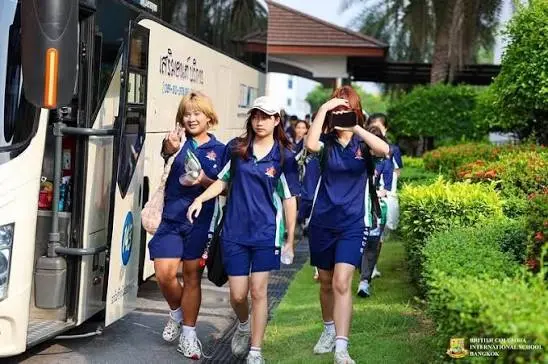
The English National Curriculum — at Bangkok Patana, Bangkok Prep and many others — is the most common primary pathway in the city: structured, subject-based, with clear expectations per year group and a smooth runway into IGCSE later. The IB Primary Years Programme, at NIST and British Columbia International School, organises learning around interdisciplinary “units of inquiry” instead — children investigate big questions and pull skills from different subjects to answer them. PYP children tend to become confident presenters and questioners; the trade-off is a less obviously structured path through core skills, which matters if you might transfer into a traditional system later.
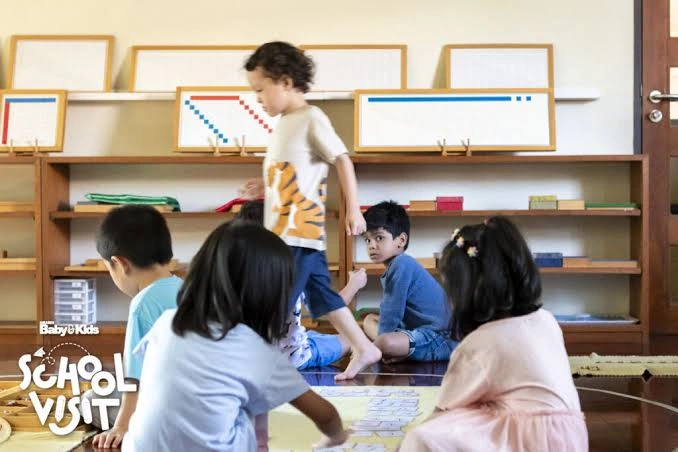
American elementary programmes, such as Ruamrudee's, follow US grade-level standards with continuous assessment and no national exams. The Australian International School offers the Australian curriculum through primary before a Cambridge secondary pathway. And John Wyatt Montessori runs genuine Montessori primary and elementary education for ages 3–12 — mixed-age classrooms, self-directed work, and a calm pace that suits some children perfectly.
Through-schools: primary as the first chapter
Most Bangkok families end up in the primary section of an all-through school, and the big names earn their reputations here. Bangkok Patana's primary school follows the English National Curriculum with the resources of the city's oldest British-style school behind it. NIST runs the PYP in the centre of the city as the first stage of a full IB continuum. Bangkok Prep carries children from its well-regarded primary campus through to secondary, and Ruamrudee offers an American elementary programme within its all-through campus on the eastern side of the city.
The great advantage is continuity: no admissions process at 11, friends who stay together, and teachers who already know your child when the secondary years begin. The question to ask is how the primary phase keeps its own identity — the best through-schools run their primary years as a distinct, child-scaled world, not a miniature version of the senior school.
Primary-only settings: small by design
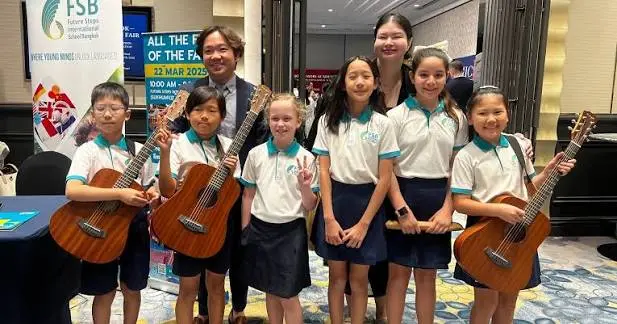
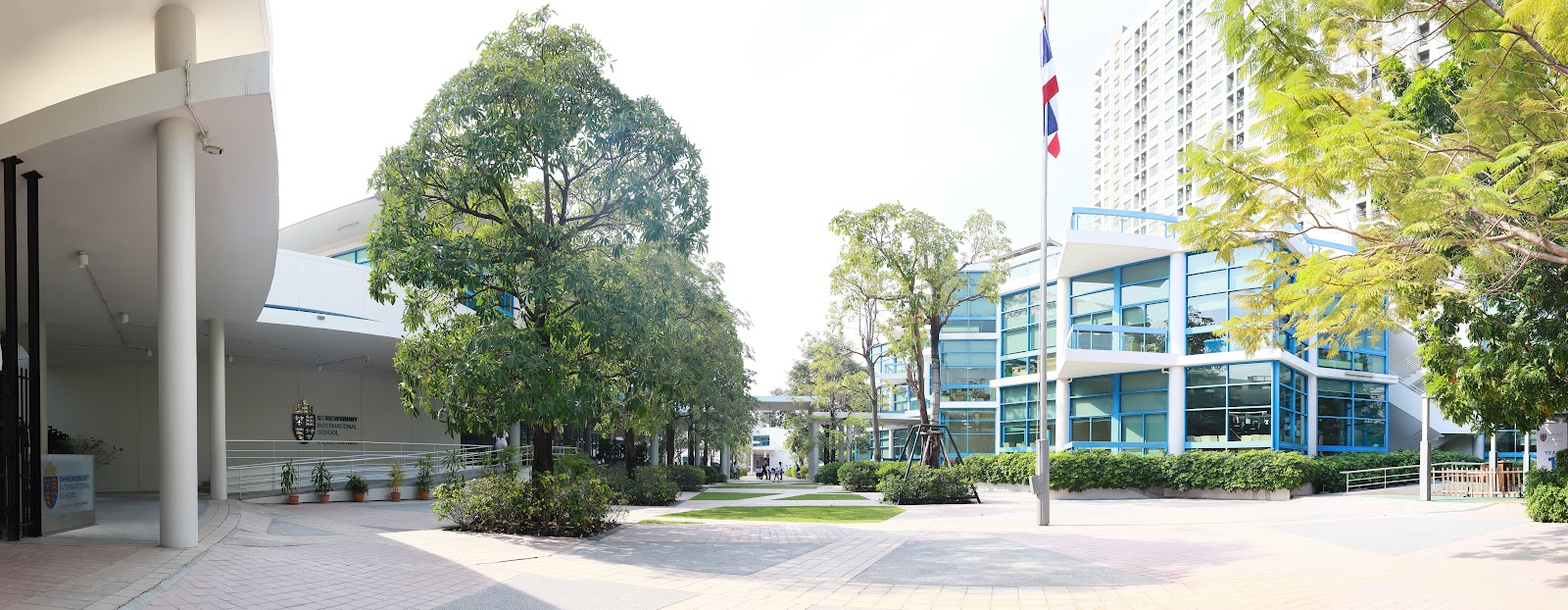
Bangkok's primary-focused schools offer something the big campuses cannot: a school built entirely around young children. Future Steps International School covers British early years and primary from 16 months to age 11 at THB 324,000–505,000. Shrewsbury's City Campus brings the Shrewsbury approach to a dedicated early-years and primary site for ages 2–11. John Wyatt Montessori extends the Montessori method through the elementary years to age 12.
The trade-off is the move at 11. Bangkok's popular secondary entry points fill well ahead, so if you choose a primary-only path, start the secondary search by Year 4 or 5. Ask your primary school where its leavers typically go — experienced heads know exactly which secondaries suit which children, and their guidance is one of the hidden benefits of a good primary-only school.
Not sure which schools fit your family?
Choosing an international school depends on your child's age, curriculum preference, location and budget. Tell us what you're looking for and we'll help you identify schools worth considering.
Literacy, maths and the questions that matter
However a school packages its curriculum, the core of primary is reading, writing and mathematics. Ask each school how it teaches early reading — systematic phonics or a broader approach — and how it teaches maths: Singapore-style mastery schemes are common in Bangkok's better primaries. Then ask the question that reveals most: what happens when a child is behind, and what happens when a child is ahead?
Good schools answer with specifics: intervention programmes, extension work, streaming policies, how progress is tracked and shared with parents. Vague answers about “differentiation” are a warning sign. At this age, a child who slips behind in reading needs to be caught in weeks, not terms.
Pastoral care and settling a young child
For many Bangkok families, primary school is also their child's first experience of a new country. Ask how the school inducts new children mid-year — buddy systems, new-family programmes, and EAL support make an enormous difference to how quickly a child feels at home. Bangkok's established primaries do this well because they do it constantly; the city's turnover means every class has children who arrived recently.
Look too at the shape of the day: how much outdoor and play time children get, how the school handles Bangkok's heat and air quality, what lunch looks like, and how the school communicates with parents. These details sound small; over six years of primary school, they are the texture of your child's childhood.
Admissions at primary age: what to expect
Primary admissions in Bangkok are refreshingly humane compared with secondary entry. For the youngest years, schools typically ask for a play-based observation or an informal session rather than a test; from around Year 2 upwards, expect a short assessment in reading, writing and mathematics, plus a look at recent school reports. The purpose is placement, not selection for its own sake — schools want to be sure they can teach your child well.
Prepare the paperwork early: passport copies, previous school reports, immunisation records and any learning-support documentation. If your child has had educational psychology assessments or receives learning support, declare it upfront. Bangkok's better primaries have genuine support provision, but they plan staffing around honest numbers, and a surprise after enrolment helps nobody — least of all your child.
Building your primary shortlist
Start with the constraints: your child's age and entry year, your budget including extras, and the area of Bangkok you can realistically live in. That typically leaves four or five schools. Then visit — on a normal teaching day — and watch a lesson in your child's year group if the school allows it.
Ask the same questions everywhere: class size and staffing in the relevant year, the reading and maths approach, EAL and learning-support provision, how new children settle, and the full annual cost including lunch, transport and activities. And if your child is old enough to have a view, listen to it — a child who feels they chose their school walks in differently on the first day.
Frequently Asked Questions
What age does primary school start in Bangkok's international schools?
Formal primary education typically begins at age 5 (Year 1 in British schools, Kindergarten in American ones), following nursery and reception years that many schools offer from age 1–3. Most Bangkok international schools run primary through to age 11, after which children move into secondary within the same school or apply elsewhere.
Which primary curricula are available in Bangkok?
The main choices are the English National Curriculum (used at Bangkok Patana, Bangkok Prep and many others), the IB Primary Years Programme (at NIST and British Columbia International School), American elementary programmes (Ruamrudee), Montessori (John Wyatt) and the Australian curriculum. All are well represented, so the choice can be made on your child rather than on availability.
How much do Bangkok primary schools cost?
Listed annual fees at primary level range from around THB 234,300 at Modern International School Bangkok and THB 324,000–505,000 at Future Steps, up to THB 545,000–1,044,000 at Bangkok Patana and THB 628,200–1,094,500 at NIST (whole-school ranges; the primary years sit at the lower end of each). John Wyatt Montessori lists fees on request.
Should I choose a primary-only school or a through-school?
A primary-only setting like Future Steps or Shrewsbury City Campus (ages 2–11) offers a small, child-scaled environment — but you will need a second admissions process for secondary. A through-school like Bangkok Patana or NIST offers continuity to 18. If you expect to stay in Bangkok beyond primary, continuity is worth real weight in the decision.
How do Bangkok schools teach reading and maths in primary?
British-curriculum schools typically follow structured phonics programmes for early reading and a mastery approach to maths. IB PYP schools embed literacy and numeracy within units of inquiry. Ask each school to explain its actual approach and — more usefully — how it supports a child who is ahead or behind the expected level for their age.
My child speaks little English. Can they cope in an English-medium primary?
Yes — primary is the easiest age to make the jump, and Bangkok schools are experienced at it. Most run English-as-an-additional-language support, but capacity and cost vary. Declare your child's language background at application and ask exactly how support is delivered: withdrawal sessions, in-class support, or a structured induction programme.
What about homework, testing and pressure at Bangkok primaries?
Cultures differ. British and IB schools generally keep formal testing light in the early primary years, building assessment gradually; some schools and systems are more test-oriented. Ask each school about its homework policy per year group and how it reports progress — the answers tell you a lot about the school's philosophy.
When should I apply for a Bangkok primary place?
For popular schools and entry points, six to nine months before the August intake is sensible. Mid-year entry is often possible thanks to expat turnover, but availability is year-group specific — a school can be full in Year 2 and open in Year 5. Ask each school directly about your child's exact year.
International schools in Primary within all-through schools
- Bangkok Patana School
- NIST International School
- Ruamrudee International School
- British Columbia International School Bangkok
- Australian International School Bangkok
International schools in Primary-focused and shorter age-range settings
- Future Steps International School Bangkok
- Shrewsbury International School City Campus
- John Wyatt Montessori — Bangkok Campus
Looking for a Bangkok primary school?
Tell us your child's age, preferred curriculum and where you expect to live, and we'll help you build a realistic shortlist.
Related guides
- International Schools in Bangkok: A Parent's Guide
- Bangkok International School Fees 2026: What It Really Costs
- How to Apply to an International School in Bangkok
- IB Schools in Bangkok: How to Choose the Right One
- British Schools in Bangkok: Curriculum, Fees and How to Choose
- Best Areas of Bangkok for Expat Families: Schools, Commutes and Housing
- American Schools in Bangkok: Curriculum, Fees and How to Choose
- European Curriculum Schools in Bangkok: French, German/Swiss and British Pathways
- Best International Schools in Bangkok: A Parent's Guide to Choosing Well
- Nurseries and Early Years in Bangkok: A Parent's Guide