International Schools in Bangkok
Bangkok is the deep end of international schooling in Thailand: more schools, more curriculum choice and a wider fee spread than anywhere else in the country, spread across a city where a fifteen-kilometre journey can take an hour. That combination means the Bangkok decision is rarely about finding the single best school — it is about matching a curriculum, a fee band and a location that work together for your family's daily life.

Quick answer
A parent's guide to international schools in Bangkok: curricula, fee ranges, school locations, commuting, neighbourhoods and how to shortlist properly.
At a glance
- City: Bangkok
- Sections: 10
- Questions answered: 8
- Schools listed: 13
- Read time: 12 min read
What makes the Bangkok market different from the rest of Thailand
Outside the capital, most Thai cities give families a handful of realistic international options, and the decision is largely made for you by geography. Bangkok inverts that problem. There are enough schools here that almost every curriculum, price point and school size is represented, and the difficulty becomes filtering rather than finding.
The practical consequence is that a Bangkok shortlist should be built from constraints first. Fix the year group your child will enter, the maximum you can sustain in annual fees, and the parts of the city where you can realistically live, and the list usually shrinks from dozens of schools to a workable six or eight. Families who start from reputation instead of constraints tend to spend months touring campuses they were never going to choose.
Where Bangkok's schools actually are
Bangkok's international schools sit in three broad bands. Central campuses, in and around Sukhumvit, Sathorn and the riverside, are the most convenient for families working in the central business district and living in condominiums — St Andrews International School Sukhumvit and NIST International School are examples of schools with genuinely central locations.
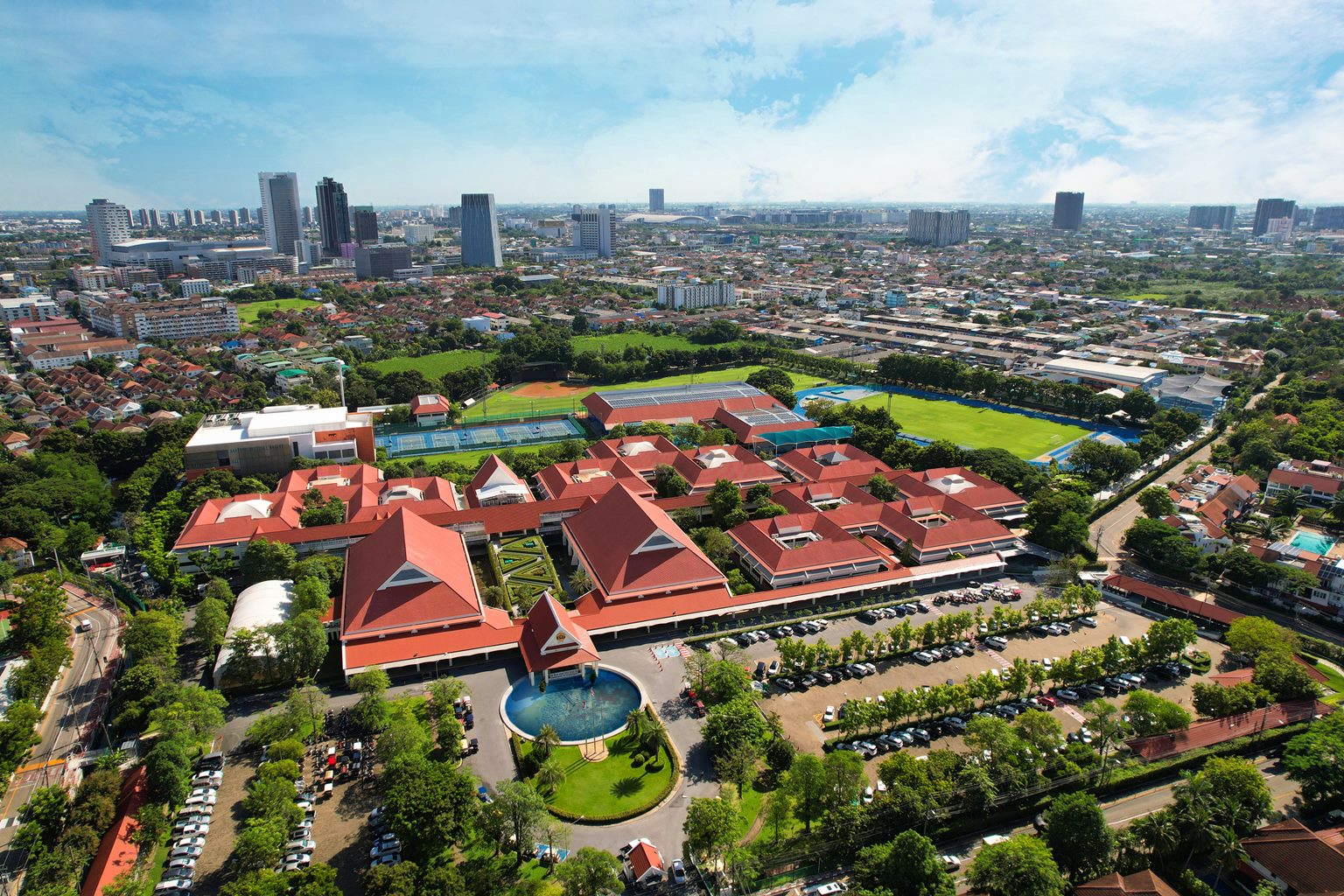
A second band sits on larger sites further out, where space allowed for full sports facilities and all-through provision: Bangkok Patana School, Brighton College Bangkok and VERSO International School are in this group, generally reached from the eastern side of the city. A third band lies west and north of the river, including Denla British School, serving families settled in the suburbs around Nonthaburi and Ratchaphruek. Which band you choose effectively decides where you will live.
Curriculum availability across the city
Bangkok is one of the few places in Thailand where you can genuinely compare like with like. British-curriculum schools are the largest group, from established names such as Harrow International School Bangkok and Wellington College International Bangkok to smaller campuses like Traill International School and International Pioneers School. American programmes run from International School Bangkok and Ruamrudee International School through to smaller campuses such as The American School of Bangkok and Trinity International School Bangkok.
The IB is unusually well covered for a Southeast Asian city, with full-continuum schools including NIST International School, KIS International School and Concordian International School, alongside schools that add the Diploma at sixth form. A number of Bangkok schools also list bilingual Thai-English or Singapore-influenced programmes, which suit families expecting a long stay in Thailand.
Fee bands: what your budget actually buys in Bangkok
The fee spread within Bangkok is wider than the gap between Bangkok and other Thai cities. At the top, the largest and most established campuses list annual tuition in the high twenties to mid thirties of thousands of US dollars. A broad middle band — schools such as St Andrews International School Bangkok, Bromsgrove International School Thailand and Regent International School Bangkok — sits roughly between US$10,000 and US$22,000. Below that, a genuine budget tier exists, with schools including TSI International School and Ramkhamhaeng Advent International School listing from around US$6,000.
Those published ranges are tuition only. Registration, application, deposit, capital or development contributions, bus, uniform, lunch and trips sit on top, and in Bangkok the bus is a meaningful annual line rather than an afterthought. Our Bangkok fees guide sets out how to build the true annual figure.
Commuting: the constraint most families underestimate
Nothing shapes daily life in Bangkok more than the school run. Traffic is heavy, unpredictable and worst precisely when schools start, so a journey that takes twenty minutes on a Sunday viewing can take well over an hour on a Tuesday morning. Families who did not test this before signing a lease are the ones who move house after a year.
Most schools operate their own bus networks with fixed routes and pick-up points. Before committing to a condominium or house, ask the admissions office whether your intended address is already on a route, how long that route takes in the morning, and what the pick-up time would be. A school ten kilometres away on an existing bus route is usually a better daily proposition than one five kilometres away that you would have to drive to yourself.
Not sure which schools fit your family?
Choosing an international school depends on your child's age, curriculum preference, location and budget. Tell us what you're looking for and we'll help you identify schools worth considering.
Choosing a neighbourhood around the school, not before it
The common Bangkok mistake is choosing a neighbourhood first, on the strength of a short visit or a colleague's recommendation, and then discovering which schools have space within reach of it. Central Sukhumvit and Sathorn suit families who want condominium living, short work commutes and walkable amenities. The eastern corridor towards Bang Na and Krungthep Kreetha suits families who want houses with gardens and larger campuses. The western suburbs offer more space again at lower rents but longer trips into the centre.
Because a year-group place is not guaranteed anywhere, the safer sequence is to apply to schools across two areas, then sign a lease once an offer is confirmed. Short-term serviced accommodation for the first weeks costs less than breaking a lease.
School size and what it means day to day
Bangkok gives you a real choice on scale, and it matters more than parents expect. The largest campuses run substantial sports programmes, multiple language options, extensive facilities and a wide sixth-form subject list, and they suit children who thrive in a big, busy environment with lots of pathways.
Smaller Bangkok schools — including primary-only settings such as Kensington International School or the early-years focus of New Sathorn International School — offer smaller cohorts, more staff familiarity and an easier landing for an anxious child or a young starter. The trade-off is narrower subject choice higher up, and in some cases the need to move schools at secondary level. If you expect to be in Bangkok for two or three years, that transition is worth planning for now rather than later.
Practical checks before you shortlist a Bangkok school
A Bangkok shortlist checklist
- Confirm space in your child's exact year group before anything else
- Check whether the school switches curriculum at sixth form
- Ask whether your intended address is on an existing bus route
- Build a total cost including registration, capital fees, bus and uniform
- Test the actual morning commute, not the map distance
- Compare at least one large campus and one smaller school before deciding
Ask each school which year groups currently have space, since availability in Bangkok varies sharply by entry point and a school can be full in Year 4 and open in Year 6. Confirm the upper-school pathway, because several British-curriculum Bangkok schools move to the IB Diploma after IGCSE. Ask what the school's own accreditation and Thai Ministry of Education status is rather than inferring it from a name.
Then ask the operational questions: bus coverage for your area, the school day's start and finish times, term dates against your work calendar, and how the school supports children arriving with no Thai and, in many cases, limited English. Every one of these answers is school-specific — nothing in Bangkok is standardised across the sector.
Getting around: BTS, MRT and the Bangkok school run
Bangkok's transport map explains the geography of its schools better than any district list. The BTS Skytrain runs along Sukhumvit through Asok, Phrom Phong, Thonglor, Ekkamai and On Nut before reaching Bearing and Samut Prakan, and along Silom towards Sathorn. The MRT loops through Rama IX, Phetchaburi and Lumphini and crosses the Chao Phraya towards Thonburi. Families who live within walking distance of a station and choose a school reachable from that same line have a materially easier week than those relying entirely on road journeys.
Most campuses, though, are not on a rail line. Bangkok Patana School sits towards Bang Na, Brighton College Bangkok towards Krungthep Kreetha, Denla British School out past Ratchaphruek on the Nonthaburi side, and Concordian International School and VERSO International School further out again. For those schools the bus network, not the Skytrain, is the practical answer, and the route map published by the admissions office is the single most useful document in the whole search. Ask for it early: it tells you, more precisely than any neighbourhood article, which parts of Bangkok you can realistically live in.
How to use ESG to compare Bangkok schools
Every Bangkok school we hold a profile for is listed in the Bangkok city directory with its curriculum, age range, indicative fee band and contact details, so you can filter without visiting a dozen individual websites. Profiles link out to the school's own admissions pages, which remain the authoritative source for current fees and deadlines.
From there, our Bangkok admissions guide covers the application sequence and documents, and the Bangkok fees guide covers total cost. If you would rather not work through the list yourself, tell us your child's age, budget and likely area and we will narrow it to the schools that genuinely fit.
Frequently Asked Questions
How many international schools are there in Bangkok?
Bangkok has by far the largest concentration of international schools in Thailand. ExpatSchoolGuide currently lists dozens of Bangkok schools across British, American, IB and bilingual programmes, from small single-campus primaries to large all-through campuses running from nursery to Year 13.
Which areas of Bangkok do most expat families live in for school access?
Families most often settle along the Sukhumvit corridor, around Sathorn and Silom, or further out towards Bang Na, Rama IX and the western suburbs where the larger campuses sit. The right area depends far more on which school you get a place at than on any general ranking of neighbourhoods.
Do Bangkok international schools follow the British or American system?
Both are well represented, alongside a large IB presence. Several Bangkok schools run a British programme to IGCSE and then switch to the IB Diploma in the sixth form, so check the upper-school pathway rather than assuming the curriculum label applies to every year group.
Is Bangkok expensive for international schooling compared to the rest of Thailand?
Bangkok covers the widest fee range in the country. Listed annual tuition on ESG for Bangkok schools spans from roughly US$6,000 at the most affordable campuses to around US$35,000 at the most established. Provincial cities have fewer options at the top of that range.
How much does the commute matter when choosing a Bangkok school?
A great deal. Bangkok traffic makes distance a poor predictor of journey time, and a campus that looks close on a map can be a long trip at 7am. Test the route at real drop-off times, and check whether the school's bus network already covers the area you are considering.
Can my child start at a Bangkok school mid-year?
Often yes, subject to space in the specific year group. Popular Bangkok year groups fill first, so mid-year entry usually means working from a shortlist rather than a single first choice. See our Thailand guide to how to apply for the full process.
Are there Bangkok schools for younger children only?
Yes. Alongside all-through campuses, Bangkok has early-years and primary-only settings such as Kensington International School and New Sathorn International School, which suit families who want a smaller environment before moving to a larger secondary campus.
Where can I compare Bangkok schools side by side?
The Bangkok city directory lists every school we hold a profile for, with curriculum, age range, fee range and contact details, and links through to full profiles you can compare.
International schools in Large all-through campuses
- Bangkok Patana School
- International School Bangkok
- NIST International School
- Shrewsbury International School Bangkok
International schools in UK-linked schools in Bangkok
- Harrow International School Bangkok
- Brighton College Bangkok
- Wellington College International Bangkok
- Denla British School
International schools in Mid-range and specialist options
- KIS International School
- St Andrews International School Sukhumvit
- VERSO International School
- Traill International School
- Kensington International School
Not sure which Bangkok schools realistically fit your family?
Tell us your child's age, your budget and the part of Bangkok you expect to live in, and we'll point you to the schools worth contacting.
Related guides
- International School Fees in Bangkok: What Parents Actually Pay
- How to Apply to an International School in Bangkok
- IB Schools in Bangkok: How to Choose the Right One
- British Schools in Bangkok: Curriculum, Fees and How to Choose
- Best Areas of Bangkok for Expat Families: Schools, Commutes and Housing
- International Schools in Thailand: A Parent's Guide