International Primary Schools in Beijing
Primary is the stage at which most families arrive in Beijing, and it is the stage at which the decision matters most — because a child who starts at five in the right programme leaves the posting with functional Mandarin, and one who starts at five in the wrong one leaves with a few phrases. Nearly all of the 18 schools ESG profiles in Beijing run a primary section, and all 18 have complete profiles, so the information is there; what is missing from most prospectuses is the practical detail a parent of a six-year-old actually needs. Entry ages differ by curriculum, so the same child can be placed in different year groups at two schools. Mandarin provision varies from a subject taught twice a week to a genuine language of instruction. Air-quality protocols differ in quality and are rarely volunteered. And the Shunyi-versus-Chaoyang split determines a bus ride that a five-year-old will make ten times a fortnight. This guide covers all four.
Quick answer
Compare Beijing's international primary schools — entry ages, Shunyi versus central Chaoyang, Mandarin provision, air-quality protocols, primary fees and admissions.
At a glance
- City: Beijing
- Sections: 6
- Questions answered: 8
- Schools listed: 15
- Read time: 11 min read
Entry ages and where your child will actually be placed
Questions to ask about placement
- What is your cut-off date and which year group would my child enter?
- How does that compare with their current year group at home?
- Would you consider a year either side, and what evidence would you want?
- How do you support a child who is young or old for their cohort?
Beijing runs three primary structures side by side, and a family arriving mid-year should expect different schools to place the same child differently.
British-curriculum schools — Dulwich College Beijing, The British School of Beijing and Harrow International School Beijing — follow the English pattern: Reception in the academic year in which a child turns five, Years 1 to 6, primary finishing at eleven. Cut-offs are typically 31 August, which makes a September-born child among the oldest in the year and an August-born child the youngest.
IB Primary Years Programme schools — the International School of Beijing, Western Academy of Beijing, Beijing City International School, BISS, the Canadian International School of Beijing and Yew Chung — take children from around three into early years and run through to eleven, generally placing by age at entry with a little more flexibility around boundaries.
North American structures place Kindergarten at five with elementary to Grade 5.
The practical consequence is that a summer-born child may be offered Year 2 at one school and the equivalent of Grade 1 at another. Neither is a mistake. Ask both schools how they placed your child and on what evidence, and think about whether your child is better served at the top or the bottom of a cohort — a question that carries far more weight at six than at sixteen, particularly for a child who is also adjusting to a new country and, often, a new language of instruction.
Mandarin in primary: Beijing's real advantage
Beijing is the centre of standard Mandarin, and primary is the window in which a child can genuinely acquire it. Families who plan this deliberately get something out of the posting that outlasts it; families who leave it to the timetable generally do not.
Three levels of provision exist. The deepest is bilingual instruction: 3e International School runs an English–Chinese bilingual early years and primary programme, and Keystone Academy uses Chinese alongside English as a language of instruction. Children in these settings become literate in Chinese rather than merely conversational.
In the middle sit the established international schools that stream Chinese by tested ability from Year 1 or Grade 1, with distinct native-speaker and beginner tracks, specialist teachers and a meaningful weekly allocation. Yew Chung's co-teaching model — a Chinese and a Western teacher sharing the primary classroom — sits at the stronger end of this group.
At the lightest, Chinese is one language among several, taught to a mixed-ability class a few periods a week. That is a defensible choice for a two-year posting where the priority is curriculum continuity, but it should be a choice rather than an accident.
Ask each school how many periods a week your child's year group receives, whether streaming is by tested ability rather than by nationality, what proportion of the class are native speakers, and what a beginner typically achieves by the end of primary.
Shunyi, Chaoyang and the five-year-old's commute
Beijing's international sector clusters in the north-east, and for a primary family the choice between the two main areas is really a choice about the morning.
Shunyi, out towards the airport, is the classic expatriate family district. Villa compounds with gardens and shared play areas, other school families as neighbours, bus routes designed around the compounds, and a slower, greener environment than central Beijing. For a child of five to eleven it is close to ideal, and the school run is often ten to twenty minutes.
Central Chaoyang — Liangmaqiao, Lido, the embassy districts — puts you in the city, with apartment living, restaurants, culture and a short commute for a parent working in the CBD. Western Academy of Beijing, Beijing City International School, Yew Chung and 3e serve this area well. The trade-off is traffic-dependent journeys and less outdoor space at home.
Whatever you choose, the sequence is the same: office first, school second, housing third. Ask each shortlisted school for its current bus route map before you view any property. In Beijing, an existing route into your compound is frequently the whole difference between a school being practical and being theoretical, and a route added "if there is demand" is not a route you can plan around.
A door-to-door journey beyond about forty minutes is a genuine red flag for a child under eight, regardless of how strong the school is.
Not sure which schools fit your family?
Choosing an international school depends on your child's age, curriculum preference, location and budget. Tell us what you're looking for and we'll help you identify schools worth considering.
Air quality, outdoor play and the questions to ask
Beijing's air quality has improved considerably over the last decade, but it remains a legitimate factor in a primary school choice and it is one that schools handle with very different levels of investment.
Every established school operates an air-quality protocol: an index threshold above which outdoor break and sport move indoors, communicated to parents each morning. What varies is what indoors actually means. The larger campuses have built filtered sports domes or halls precisely for this, so a full PE programme continues on an indoor day. Smaller settings may have less, and a run of indoor days can mean a primary child gets significantly less physical activity.
The questions worth asking on a tour are concrete. What index triggers an indoor day? How many indoor days were there last academic year? Are classrooms and sports spaces filtered, and how is filtration maintained? What does the PE programme look like on an indoor day for a Year 3 child? Is there a covered outdoor area for lower-index days?
Schools that manage this well answer immediately with numbers, because parents ask constantly. Vague answers are informative in themselves. It is also worth asking how the school communicates on the day — a text or app notification before the bus leaves is the standard families expect.
Fees, availability and applying
Primary is the least expensive stage of an international education in Beijing, because fees scale by year group and primary sits at the bottom of each school's range. The gap between a primary and a senior-year figure at the same school is often substantial, so do not judge affordability by a school's top-of-range published number.
Only 11 of Beijing's 18 profiled schools publish fee information, a lower disclosure rate than Shanghai, so a realistic budget requires direct enquiries. Ask for the schedule for the exact year group your child would enter, and ask what sits above tuition: application fee, one-off enrolment or capital levy, bus by distance band, lunch, uniform and after-school activities. The one-off items are the same whatever your child's age, so enrolling two or three primary children at once lands all of them in your first year.
On availability, primary entry is assessment for placement rather than competitive selection at most schools, but Beijing's sector is smaller than Shanghai's and specific year groups do fill. Ask the precise question — is there a place in Year 4 starting in February, how many families are ahead of us, how many places came free in that year group last year — rather than asking about availability in general.
Documentation is what usually delays families: passports and visa status, previous school reports sometimes needing translation, and immunisation records, which are checked carefully for younger children. Start assembling that pack as soon as the posting is confirmed.
What to look for on the primary tour
A prospectus sells the senior school. On the visit, look at the things a six-year-old will actually experience.
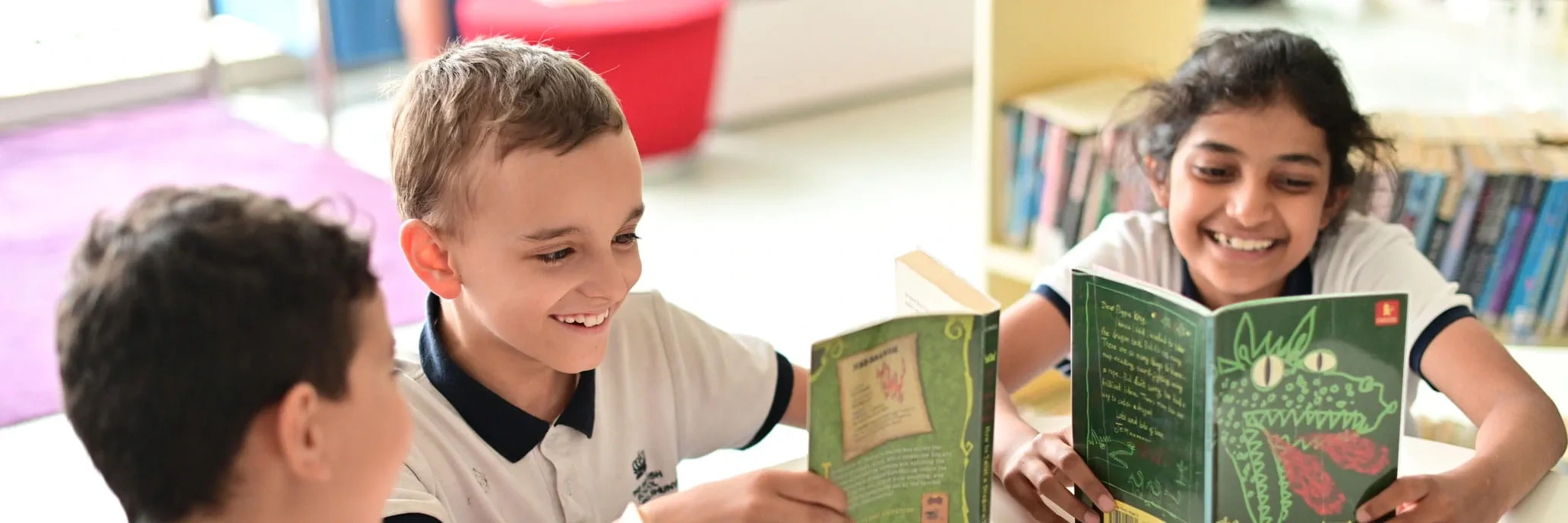
Watch a primary lesson if you can and look at the children rather than the teacher: are they talking to each other, is the work on the walls theirs, is the room busy or quiet in a way that suits your child. Ask about the class size in the specific year group your child would join, and the teaching assistant ratio in the early years.
Ask what happens in the first fortnight for a mid-year arrival: is there a buddy system, a structured induction, an English-language support programme if your child needs one, and who the named point of contact is for the family. Beijing schools deal with mobile families constantly and the strong ones describe this fluently.
Look at both the outdoor and the indoor play space, and ask how much of each a primary child uses on a typical day and on an indoor day.
Finally, ask to speak with a parent who arrived from your country within the last two years. Their account of the first term will tell you more than any tour, and schools that are confident in their primary section arrange it without hesitation.
Frequently Asked Questions
Which are the main international primary schools in Beijing?
The largest primary sections belong to the International School of Beijing, Western Academy of Beijing, Dulwich College Beijing, The British School of Beijing, Harrow International School Beijing, Beijing City International School and the Canadian International School of Beijing. Smaller and more specialised primary provision comes from 3e International School, which runs a bilingual English–Chinese programme, Yew Chung's co-taught model, BISS and the national-community schools.
What age do children start primary school in Beijing?
It depends on the curriculum. British-curriculum schools place children in Reception in the academic year they turn five and finish primary at eleven. IB Primary Years Programme schools take children from around three and also finish at eleven. North American structures start Kindergarten at five with elementary running to Grade 5. Ask each school for its cut-off date, because a summer-born child can be placed in different year groups at two Beijing schools.
Is Shunyi or central Beijing better for a primary-age child?
Shunyi suits younger children well: villa compounds with gardens, short bus routes, other school families living nearby and an easy walk-to-the-bus-stop morning. Central Chaoyang suits families who want city life and a working parent close to the CBD, with apartment living and slightly longer or more traffic-dependent journeys. For a five-year-old the deciding factor is almost always the length of the bus ride, not the campus.
How much does primary school cost in Beijing?
Fees scale by year group, so primary sits at the lower end of each school's published range — often well below the senior-year figure at the same school. The national-community schools are considerably cheaper than the commercial sector, the mainstream IB and British schools occupy a broad middle, and the largest campuses sit at the top. Only 11 of Beijing's 18 profiled schools publish figures, so budget on the basis of direct enquiries.
How much Mandarin will my child learn in a Beijing primary school?
More than in most cities, if you choose deliberately. Beijing is the home of standard Mandarin, and most established schools stream Chinese by tested ability from the first year of primary with separate native-speaker and beginner tracks. 3e International School and Keystone Academy go further and use Chinese as a language of instruction. A child starting at five in a serious programme can reach genuine working fluency by eleven.
How does air quality affect primary schooling in Beijing?
Every established school has an air-quality protocol governing when outdoor play and sport move indoors, and most of the larger campuses have filtered indoor sports domes or halls specifically for this. It is a reasonable and expected question to ask on a tour: what index triggers an indoor day, how often that happened last year, what the indoor provision looks like and whether classrooms are filtered.
Is primary admission in Beijing competitive?
Generally it is assessment for placement rather than competitive selection: a play-based observation for the youngest children, recent reports and an English-language check for older primary children. Beijing's sector is smaller than Shanghai's, so a specific year group at a specific campus can genuinely be full. Ask about your exact year group and start date, and how many places came free in that group last year.
Should we pick a primary school or a through-school?
Where you can, choose a through-school and judge it on its primary section. Most of Beijing's main schools run from the early years to eighteen, which means one admissions process, one bus and one community for the whole posting. But judge the school on class sizes, the primary team, outdoor and indoor play space and mid-year induction — not on its A Level or Diploma results, which will not apply to your child for a decade.
International schools in Shunyi and the north-east
- International School of Beijing (ISB)
- The British School of Beijing
- Dulwich College Beijing
- Harrow International School Beijing
- Canadian International School of Beijing
International schools in Central Chaoyang
- Western Academy of Beijing (WAB)
- Beijing City International School (BCIS)
- Yew Chung International School Beijing
- 3e International School
- Beijing BISS International School
International schools in Bilingual and national-community primary
- Keystone Academy
- Lycée Français International de Pékin
- Deutsche Botschaftsschule Peking
- Japanese School of Beijing
- Korean International School in Beijing
Looking for a primary place in Beijing?
Tell us your child's age, your arrival date and your district — we'll tell you which Beijing schools have realistic availability in that year group.
Related guides
- International Schools in Beijing: A Complete Guide for Expat Families
- International School Fees in Beijing: What Families Actually Pay
- International Primary Schools in Shanghai: A Guide for Expat Families
- International Schools in China: A Parent's Guide
- Bilingual Schools in China: A Parent's Guide
- Moving to China with Kids: A Practical Guide