International Primary Schools in Shanghai
Primary is where the Shanghai school decision is actually made. Almost every one of the 26 schools ESG profiles in the city runs a primary section, so unlike the senior years the choice is not narrowed for you — and the criteria that matter for a six-year-old are almost entirely different from the ones a prospectus leads with. Entry ages differ by curriculum, which means the same child can be placed in different year groups at two schools across the road from each other. Mandarin provision differs more in primary than at any other stage, and this is the stage at which a child can still reach genuine fluency. And the commute, which a teenager tolerates, sets a hard practical limit for a young child in a city divided by a river. This guide covers all three, along with primary fee levels, how admission works and how to judge a primary section on a school tour.

Quick answer
Compare Shanghai's international primary schools — entry ages by curriculum, Pudong and Puxi clusters, Mandarin streaming, primary fee bands and admissions.
At a glance
- City: Shanghai
- Sections: 6
- Questions answered: 8
- Schools listed: 18
- Read time: 12 min read
Entry ages: the same child, two different year groups
Ask every school these age questions
- What is the cut-off date, and which year group would my child enter?
- How does that map to the year group they are currently in?
- Would you consider placing them a year either side, and on what evidence?
- What happens at the primary-to-secondary transition within the school?
Shanghai's primary sector runs three different age structures side by side, and families arriving mid-year are often surprised by where their child lands.
British-curriculum schools — Dulwich College Shanghai's two campuses, Harrow, Britannica, British International School Shanghai, Wellington and Nord Anglia — follow the English pattern: Reception in the academic year in which a child turns five, then Years 1 to 6, finishing primary at eleven. Cut-off dates are usually 31 August, so a child born in September is among the oldest in the year and one born in August among the youngest.
American-curriculum schools — Shanghai American School, Concordia, Living Word, SCIS — run Pre-K, Kindergarten at five, then Grades 1 to 5, finishing elementary at eleven with middle school beginning at Grade 6. The cut-off is more commonly 31 August or 1 September, but not universally.
IB Primary Years Programme schools take children from around three and run through to eleven, with placement based on age at entry rather than a fixed national structure, which gives a little more flexibility for a child near a boundary.
The practical consequence is that a child born in the late summer can be offered Year 2 at one school and Grade 1 at another, effectively a year apart. Neither offer is wrong. Ask both schools how they placed your child and why, and weigh whether your child is better served being at the top or the bottom of a year group — a question that matters much more at six than at sixteen.
Mandarin in primary: the window that closes
If there is one thing families regret about Shanghai schooling, it is not taking Mandarin seriously in the primary years. A child who starts at five with structured daily exposure can reach real working fluency; a child who starts at thirteen with three periods a week will not.
Provision falls into three broad shapes. At the deepest, the bilingual model: Yew Chung International School Shanghai co-teaches with a Chinese and a Western teacher in the same primary classroom, and Shanghai United International School and the wider bilingual sector use Mandarin as a genuine language of instruction. Children in these settings become literate in Chinese, not merely conversational.
In the middle sit the mainstream international schools that stream by measured ability from Year 1 or Grade 1, with separate native-speaker and beginner tracks and a meaningful weekly allocation. A child who joins in early primary and stays five years comes out with substantial, usable Chinese.
At the lightest, Mandarin is one language among several, taught a few periods a week to a mixed-ability class. Nothing is wrong with that for a two-year posting, but be clear that it is what you are choosing.
The questions to ask are specific: how many periods a week in my child's year group, is streaming by tested ability or by nationality, what proportion of the class are native speakers, and what does a child who joins with no Chinese typically reach by Year 6.
Geography and the primary commute
For a primary-age child in Shanghai, the commute is not a detail — it is the constraint that determines which schools are genuinely available to you.
The Huangpu River divides the city, and while the tunnels and metro make crossing routine in principle, doing it twice daily in peak traffic with a six-year-old is not sustainable. In practice, families choose a side and shortlist within it.
Pudong's Jinqiao and Century Park districts are built around the school cluster: Concordia, Dulwich Pudong, Nord Anglia Pudong, Living Word and Shanghai American School's eastern provision, with low-rise compound housing and short bus routes designed for young children. It is the easiest primary logistics in the city.
Puxi is more dispersed. Gubei and Hongqiao are the traditional family districts with good bus coverage to Dulwich Puxi, Britannica, Yew Chung and the Lycée; Xuhui gives city living with SCIS Xuhui close by; and Minhang, further out, hosts Western International School of Shanghai and Dulwich Puxi with a more suburban feel.
The method is unchanged from any Shanghai school search but matters more at this age: ask each shortlisted school for its bus route map before you view housing, and treat a door-to-door journey of much beyond forty minutes as a red flag for a child under eight, no matter how good the school is.
Not sure which schools fit your family?
Choosing an international school depends on your child's age, curriculum preference, location and budget. Tell us what you're looking for and we'll help you identify schools worth considering.
What primary actually costs
Because Shanghai schools scale fees by year group, primary sits at the bottom of each published range — often RMB 40,000 to RMB 80,000 below the same school's senior-year figure. That makes primary the most affordable stage of an international education here, and it is worth remembering when comparing a school's headline top-of-range number against your budget.
Across the city, primary tuition runs from roughly RMB 60,000 at the national-community schools, through a broad RMB 150,000 to RMB 220,000 band covering most mainstream international primary sections, up towards the RMB 250,000 area at the largest campuses.
The first-year additions matter more in primary than later, because they are front-loaded regardless of your child's age: application fee, capital or enrolment levy, bus, lunch, uniform and after-school activities. A one-off levy charged for a five-year-old is the same as one charged for a fifteen-year-old, and if you are enrolling two or three children at once it lands all at the same time.
One planning point specific to primary: if you enrol at a phase-limited school such as SCIS Xuhui or one of the kindergartens, budget for a second set of application and enrolment charges when your child transitions out at eleven or six. Our Shanghai fees guide sets out the full band structure and the charges above tuition.
Admission, availability and mid-year entry
Primary admission in Shanghai is assessment rather than selection at almost every school. For the youngest children this typically means a play-based observation or a short classroom visit; for older primary children, recent school reports, an English-language assessment and a conversation with a member of the primary leadership team. Schools are checking that they can meet the child's needs, not ranking applicants against each other.
Availability is the real variable, and it moves unpredictably by cohort. A school can be full in Year 3 and have four spaces in Year 4, because the pattern reflects who happened to repatriate rather than any policy. Shanghai's faster expatriate turnover, compared with cities like Tokyo, means places genuinely do open through the year, and mid-year entry is routine rather than exceptional.
So ask the year-group question precisely: is there a place in Year 4 starting in February, how many families are on the list ahead of us, and how many places came free in that year group last year. A general enquiry about availability produces a useless answer.
What delays primary families most is paperwork rather than places: passports and visa status, previous reports sometimes requiring translation, and immunisation records, which for younger children are checked carefully. Assemble that pack early.
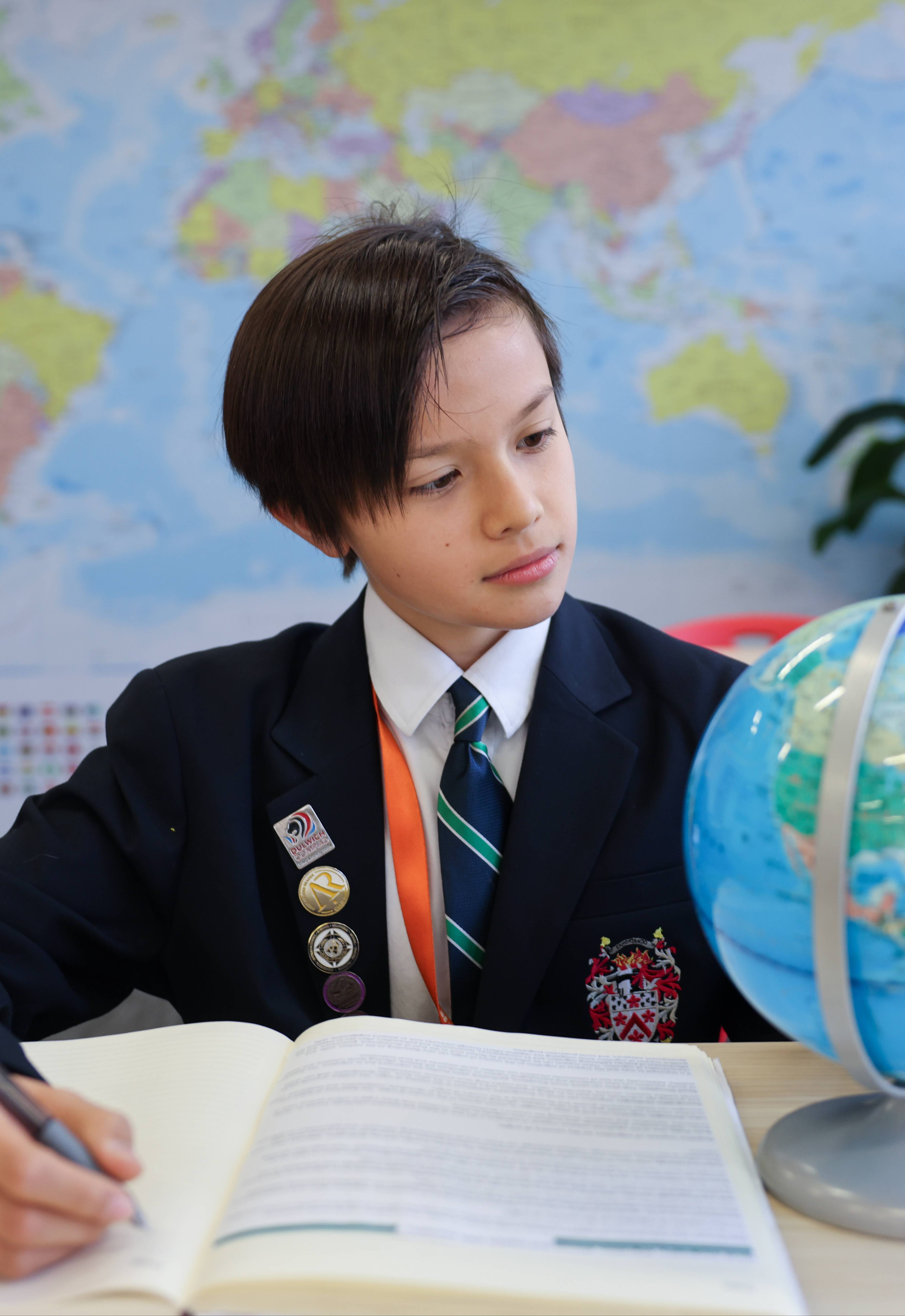
Judging a primary section on the tour
Prospectuses lead with senior-year results, which tell you almost nothing about the experience of a seven-year-old. On the visit, look at different things.
Watch a lesson if you are allowed to, and look at what the children are doing rather than what the teacher is doing. Look at the outdoor space and ask how much of it a primary child uses each day, and what happens on the many Shanghai days when air quality restricts outdoor play — every reputable school here has an indoor protocol, and the quality of it varies.
Ask about class sizes in your child's specific year group, and about the teaching assistant ratio in the early years. Ask what happens in a child's first fortnight: does the school assign a buddy, is there a structured induction, how is a mid-year arrival integrated. Shanghai schools handle mobile families constantly and the good ones have this down to a routine.
Ask to speak with a parent who arrived from your country within the last two years. Their description of the first term is the most useful information available to you, and schools that are confident will arrange it without hesitation.
Finally, do the school run at the real hour before you commit. In Shanghai, more than in most cities, the daily logistics of primary school determine whether the family is happy at the end of year one.
Frequently Asked Questions
Which are the main international primary schools in Shanghai?
Almost every international school in the city runs a primary section, so the choice is wide. The main options include Shanghai American School, Concordia, Dulwich College Shanghai Pudong and Puxi, Harrow, Wellington, Britannica, Yew Chung, Nord Anglia, Western International School of Shanghai, British International School Shanghai, Shanghai Community International School and Shanghai Singapore International School, alongside SCIS Xuhui, which specialises in ages three to eleven, and the national-community schools.
At what age do children start primary school in Shanghai?
It depends on the curriculum. British-curriculum schools place children in Reception in the September after their fourth birthday and Year 1 the following year. American-curriculum schools start Kindergarten at five and Grade 1 at six. IB primary years programmes typically begin around three in the early years and run to eleven. If your child sits near a cut-off, ask each school for its exact date policy before assuming a year group, because the same child can be placed a year apart at two Shanghai schools.
Is Pudong or Puxi better for primary-age children?
For primary in particular, the answer is whichever side of the river you live on. A young child's tolerance for a Shanghai commute is the practical limit on your choice, and crossing the Huangpu at rush hour turns a reasonable journey into an unreasonable one. Pudong's Jinqiao cluster — Concordia, Dulwich Pudong, Nord Anglia Pudong, Living Word — is built around family compounds with short bus runs. Puxi's Gubei, Hongqiao and Xuhui districts serve Dulwich Puxi, Britannica, Yew Chung, SCIS Xuhui and the Lycée.
How much does primary school cost in Shanghai?
Fees scale by year group, so primary sits at the lower end of each school's published range. Across the city, primary tuition runs from roughly RMB 60,000 at the national-community schools through the RMB 150,000 to RMB 220,000 band at most mainstream international schools, up towards RMB 250,000 at the largest campuses. Add the one-off capital levy, the bus and lunch to get a realistic first-year figure.
Do Shanghai primary schools teach Mandarin properly?
Primary is where Mandarin provision differs most, and where it matters most, because a child who starts at five has time to reach genuine fluency. Yew Chung runs a co-teaching model with a Chinese and a Western teacher in the classroom, the bilingual schools use Mandarin as a language of instruction, and most other schools stream by ability from the first year. Ask how many periods a week your child's year group receives and whether beginners and native speakers are genuinely separated.
Are there Shanghai schools that only take primary-age children?
Yes. SCIS Xuhui Campus runs from age three to eleven, and Fortune Kindergarten, Magnolia Kindergarten and Victoria Kindergarten serve ages two to six. These can be excellent for the early years, but they require a second admissions process at eleven or six, so factor that transition into your plan if your posting will still be running at that point.
How selective is primary admission in Shanghai?
Primary entry is generally assessment for placement rather than competitive selection: a play-based observation or short task for the youngest children, recent reports and a conversation for older ones, and an English-language check. Schools are looking at whether they can support the child, not at ranking applicants. Availability in a specific year group is the more common obstacle, and it varies unpredictably by cohort.
Should we choose the primary school or the secondary school?
Choose a through-school if you can, and judge it on its primary section. Most of Shanghai's main schools run from the early years to eighteen, which means one admissions process, one bus route and one community for the whole posting. Judging a school for a six-year-old by its A Level results is a common mistake; the things that matter now are class size, the primary team, outdoor space and how the school handles a child who arrives mid-year knowing nobody.
International schools in Pudong primary options
- Concordia International School Shanghai
- Dulwich College Shanghai Pudong
- Nord Anglia International School Shanghai Pudong
- Shanghai American School
International schools in Puxi primary options
- Dulwich College Shanghai Puxi
- Britannica International School Shanghai
- Yew Chung International School Shanghai
- Western International School of Shanghai
- British International School Shanghai
International schools in Early years and kindergarten
International schools in Lower-cost and national-community primary
- Shanghai Singapore International School
- Lycée Français de Shanghai
- Deutsche Schule Shanghai
- Shanghai United International School
Looking for a primary place in Shanghai?
Tell us your child's age, your arrival date and your district — we'll tell you which Shanghai schools have realistic availability in that year group.
Related guides
- International Schools in Shanghai: A Complete Guide for Expat Families
- International School Fees in Shanghai: What Families Actually Pay
- Is an International School in Shanghai Worth the Tuition?
- IB or AP in Shanghai: How to Choose the Right Senior Pathway
- International Schools in China: A Parent's Guide
- Moving to China with Kids: A Practical Guide