International Schools in Chiang Mai
Chiang Mai occupies an unusual position in Asia's international school map. It is a small sector — 13 schools against Bangkok's 38 — but an unusually transparent and affordable one: all 13 carry complete ESG profiles and all 13 publish their fees, which is a higher disclosure rate than any comparable city we track. Fee levels sit well below Bangkok's, and the cost of living difference widens that gap further. The result is a market that attracts a distinctive mix of families: remote workers and entrepreneurs choosing a Thai base outside the capital, families relocating internally from Bangkok for a slower pace, long-established missionary and NGO communities, and boarding families from across northern Thailand and neighbouring countries. This guide covers what those 13 schools actually offer, how the curricula divide, where families live, what boarding looks like here, and the burning-season air-quality question that every family considering Chiang Mai eventually asks.
Quick answer
Compare all 13 international schools in Chiang Mai — American, British, IB and bilingual curricula, published fees, boarding, neighbourhoods and admissions.
At a glance
- City: Chiang Mai
- Sections: 6
- Questions answered: 9
- Schools listed: 13
- Read time: 12 min read
The thirteen schools, grouped by curriculum
The curriculum split at a glance
- American / AP: four schools, the largest group
- IB Diploma: two schools, both with boarding
- British / Cambridge: four schools
- German, Thai-bilingual and Chinese-emphasis: three schools
Chiang Mai's sector divides more cleanly by curriculum than by geography, so that is the sensible place to start.
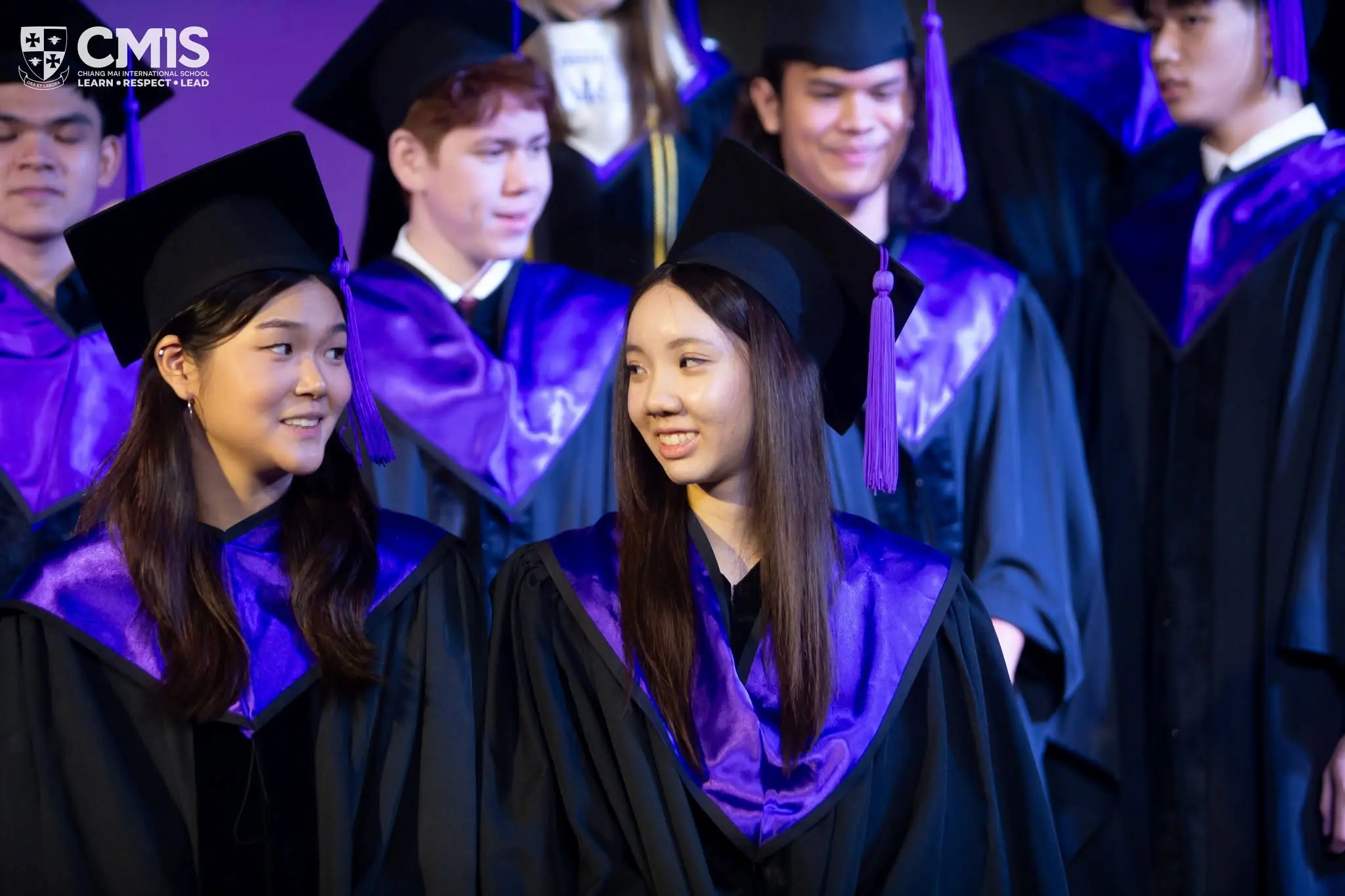
American curriculum is the largest group. Chiang Mai International School is the city's longest-established, with a stable community and Advanced Placement courses in the senior years. Grace International School serves a substantial missionary and NGO family population and has done for decades. Nakornpayap International School sits on the eastern side of the city, and Unity Concord International School runs an American Common Core programme with AP and WASC accreditation.
The IB Diploma is available at two schools. Prem Tinsulanonda International School runs the full IB continuum on a large campus out towards Mae Rim, with the most extensive grounds of any school in the north. American Pacific International School offers IB alongside American and AP pathways.
British and Cambridge routes are served by Lanna International School, with notably small cohorts near the old city; British Concordance International School, running the English National Curriculum through IGCSE and A Level; SATIT International Bilingual School, on the Cambridge International Curriculum; and Varee Chiang Mai International School, the international arm of a larger Thai group.
Finally, three schools serve specific language communities: Christliche Deutsche Schule Chiang Mai offers German-language schooling that is genuinely rare outside major capitals; Ambassador Bilingual School runs an American–Thai bilingual programme; and Americana Chinese International School emphasises Chinese alongside its international programme.
With only 13 schools, most families can realistically visit their entire shortlist in a single trip — an advantage Bangkok families do not have.
Why Chiang Mai costs less than Bangkok — and what that buys
The fee difference between Chiang Mai and Bangkok is real, substantial and easy to verify, because every Chiang Mai school publishes its schedule. A family priced out of Bangkok's upper tier will find the whole of Chiang Mai's sector within reach, and families on a modest budget will find genuine choice rather than a single option.
What the lower fee reflects is mostly scale and land cost, not corner-cutting. Chiang Mai campuses are smaller, cohorts are smaller, and the facilities arms race that drives Bangkok's top-tier pricing has not happened here. What you give up is breadth: fewer subject options at IB Diploma or A Level, fewer sports and co-curricular programmes, smaller music and drama departments, and less depth of specialist staffing.
What you gain, beyond the money, is proportion. Class sizes are generally smaller, children are known individually by staff, and the wider cost of living — housing especially — means a family income stretches considerably further than it would in the capital.
The honest way to weigh this is by your child's stage. For primary and lower secondary, the trade-off overwhelmingly favours Chiang Mai. For a child entering the final two years with a specific and unusual subject combination in mind, check the actual option blocks at each school before assuming they can be accommodated, because in a small cohort a subject runs only if enough students choose it.
Boarding in Chiang Mai
It is unusual for a city of Chiang Mai's size to support boarding at all, and the fact that two schools do says something about the region it serves. Prem Tinsulanonda International School and American Pacific International School both take boarders, drawing families from across northern Thailand, from Bangkok families wanting a different environment for a particular child, and from neighbouring countries where international provision is thinner.
Prem's Mae Rim campus is the larger and more rural of the two, with grounds well beyond what any Bangkok school can offer — a genuine draw for families who want an outdoor, activity-heavy environment rather than a city campus.
Boarding is charged separately from tuition at both schools, so ask for a schedule that separates tuition, boarding, meals, laundry and weekend activities. The questions that matter are the same anywhere: what is the boarding-staff-to-student ratio, what does a weekend actually look like, how is contact with parents handled, what happens when a child is unwell, and what proportion of boarders are full-time rather than weekly.
Also ask about the boarding community's composition. In a small school, a boarding house of predominantly one nationality feels very different from a mixed one, and neither is wrong — but you should know which you are choosing.
Not sure which schools fit your family?
Choosing an international school depends on your child's age, curriculum preference, location and budget. Tell us what you're looking for and we'll help you identify schools worth considering.
Where families live, and how the school run works
Chiang Mai's campuses are scattered around the edges of the city rather than clustered, so the usual expat pattern of picking a neighbourhood and then a school does not work well here. Choose the school first.
The Hang Dong corridor, south-west of the city, has become the most popular family area, with modern housing developments, space and reasonable access to several campuses. Mae Rim, to the north, suits families at Prem Tinsulanonda and those wanting a more rural, mountain-edge setting. Nimmanhaemin and the areas around the old city offer city living, cafés and walkability, and work well for Lanna and the more central schools. San Sai and the eastern suburbs serve Nakornpayap and the schools on that side.
Ask each shortlisted school for its bus route map before you sign a lease. Chiang Mai traffic is far milder than Bangkok's, but distances between the Hang Dong and Mae Rim ends of the city are substantial, and a badly chosen house can turn a ten-minute run into forty each way.
Many families here drive themselves rather than use a bus, which is practical in Chiang Mai in a way it is not in Bangkok — but it does tie a parent to the school timetable twice a day, so check whether a route into your area exists before you assume you will use it.
The burning season, and how to ask about it
Any honest guide to Chiang Mai has to address this. From roughly late February to April, agricultural burning across northern Thailand and the wider region produces significant smoke, and air-quality readings in Chiang Mai during those weeks can be poor for extended periods. Some families find it manageable; others, particularly those with asthmatic children, do not.
Schools have responded, and the established ones have well-developed protocols: air-quality monitoring published to parents, thresholds at which outdoor activity moves inside, filtered indoor spaces and air purifiers in classrooms. Some schools schedule their calendar around the worst weeks where they can.
The questions to ask on a tour are specific. What index threshold moves activities indoors? How many days did that trigger last year? Are classrooms filtered, and how is that maintained? What does PE look like on a smoke day? Does the school adjust its calendar or activity programme during the season? How do you communicate readings to parents each morning?
Schools that manage this well answer with numbers immediately, because every prospective family asks. It is also worth speaking to a current parent about how the season felt in practice, which is more informative than any policy document. Weigh it honestly against the rest of what Chiang Mai offers rather than treating it as either a dealbreaker or a non-issue.

Applying, and what to check before you commit
Admission in Chiang Mai is generally assessment for placement rather than competitive selection: recent school reports, an English-language check for older children, and often an informal meeting or trial day. It is a friendlier process than Bangkok's top tier.
The constraint is size. Thirteen schools with modest cohorts means a specific year group at a specific school genuinely fills, and there is little slack to absorb a mid-year arrival. Ask the precise question — is there a place in Year 7 starting in January — rather than a general one, and apply earlier than the market's relaxed reputation suggests.
Before you commit, check three things beyond the fee. First, accreditation and examination registration: confirm the school is registered to enter students for the qualifications it advertises. Second, senior-year subject options, if your child is anywhere near IGCSE, A Level, AP or the Diploma — small cohorts mean fewer guaranteed option blocks. Third, staff continuity: ask what proportion of teaching staff have been at the school more than three years, which in a small international sector tells you a great deal.
And because every Chiang Mai school publishes its fees, use that. Build a first-year total per school including application fee, any one-off enrolment charge, bus, lunch, uniform and trips, and compare properly. Full details for every school, with fees, are on our Chiang Mai directory.
Frequently Asked Questions
How many international schools are there in Chiang Mai?
ESG profiles 13 international schools in Chiang Mai, and unusually all 13 carry complete profiles and published fee data. That makes Chiang Mai one of the most transparent school markets in Asia to research from abroad — a small sector, but one where you can genuinely compare every option before you arrive.
Which curricula are available in Chiang Mai?
American is the most common, at Chiang Mai International School, Grace International School, Nakornpayap International School and Unity Concord International School. The IB Diploma is offered by Prem Tinsulanonda International School and American Pacific International School. British and Cambridge routes run at Lanna International School, British Concordance International School, SATIT International Bilingual School and Varee. German-language provision exists at Christliche Deutsche Schule Chiang Mai, and bilingual options at Ambassador Bilingual School and Americana Chinese International School.
Is Chiang Mai cheaper than Bangkok for international schooling?
Yes, consistently. Chiang Mai's fee levels sit well below Bangkok's top tier across the board, and the cost of living difference compounds that. This is the single biggest reason families relocating within Thailand, and remote-working families choosing a Thai base, look north. All 13 Chiang Mai schools publish fees, so you can verify the gap yourself rather than take it on trust.
Are there boarding schools in Chiang Mai?
Yes — Prem Tinsulanonda International School and American Pacific International School both offer boarding, which is unusual for a city of this size and draws families from across northern Thailand and neighbouring countries. Boarding is charged separately from tuition at both.
Where do expat families live in Chiang Mai?
Most families settle in the Hang Dong and Mae Rim corridors, in the Nimmanhaemin area near the old city, or in San Sai and the eastern suburbs. School location tends to drive the choice: the campuses are scattered around the city's edge rather than clustered, so families usually pick a school first and a neighbourhood within reach of its bus route second.
Is Chiang Mai suitable for a family relocating for remote work?
It is one of the better-established options in Asia for exactly that. The city has a long-standing international community, low costs relative to Bangkok or Singapore, and a school sector experienced with families who arrive outside the corporate-posting pattern. The trade-offs are a smaller sector with fewer places in any given year group, and the burning season air quality between roughly February and April.
What about air quality during the burning season?
Northern Thailand experiences significant seasonal smoke from agricultural burning, typically late February through April, and this is the factor most often raised by families considering Chiang Mai. Every established school has a response: air-quality monitoring, filtered indoor spaces and thresholds for moving activities inside. Ask each school directly what its protocol is, how many days it triggered last year and what indoor provision looks like.
How competitive is admission in Chiang Mai?
Less competitive than Bangkok, but the sector is small, so a specific year group at a specific school can genuinely be full. Ask about your exact year group and start date rather than availability in general, and apply earlier than you would for a larger market where there is more slack.
Do Chiang Mai schools lead to universities abroad?
Yes. The IB Diploma at Prem Tinsulanonda and American Pacific, the A Level route at the British-curriculum schools and Advanced Placement at the American ones are all recognised internationally. Ask each school for its recent university destination list — in a small sector, cohort size means results vary year to year, so look at three years rather than one.
International schools in American curriculum and Advanced Placement
- Chiang Mai International School
- Grace International School
- Nakornpayap International School
- Unity Concord International School
International schools in IB and boarding
International schools in British and Cambridge routes
- Lanna International School
- British Concordance International School
- SATIT International Bilingual School
- Varee Chiang Mai International School
International schools in Bilingual and national-language provision
- Christliche Deutsche Schule Chiang Mai
- Ambassador Bilingual School
- Americana Chinese International School
Considering a move to Chiang Mai?
Tell us your children's ages, your arrival date and your budget — we'll tell you which of Chiang Mai's 13 schools have realistic places and which fit your curriculum plans.
Related guides
- International School Fees in Chiang Mai: A Transparent Market
- Boarding Schools in Chiang Mai: What Families Should Know
- International Schools in Thailand: A Parent's Guide
- British Schools in Bangkok: Curriculum, Fees and How to Choose
- Best Areas of Bangkok for Expat Families: Schools, Commutes and Housing
- International School Fees in Thailand: How the Costs Really Work
- Boarding Schools in Thailand: A Guide for Parents