International School Fees in Chiang Mai
Chiang Mai is the easiest international school market in Asia to budget for, and the reason is simple: all 13 schools ESG profiles here publish a fee schedule. There are no gaps to fill with guesswork and no need to write to half your shortlist before you can compare. That transparency matters more in Chiang Mai than it would elsewhere, because a much higher proportion of families here pay from their own income rather than a corporate education allowance — remote workers, entrepreneurs, NGO and mission staff, and families who moved north from Bangkok precisely because the numbers work better. This guide sets out how the fee bands break down across those 13 schools, what is charged above tuition, how boarding is priced, how honestly the Chiang Mai–Bangkok comparison stacks up, and how to turn a set of published schedules into a realistic annual figure.
Quick answer
What international schools in Chiang Mai cost — fee bands across all 13 schools, enrolment and bus charges, boarding costs, and how the market compares with Bangkok.
At a glance
- City: Chiang Mai
- Sections: 5
- Questions answered: 8
- Schools listed: 13
- Read time: 10 min read
How Chiang Mai's fee bands break down
Reading a Chiang Mai fee band
- Bilingual and Thai-group schools form the affordable base of the market
- Mainstream American, British and German provision sits in the middle
- The largest campuses and IB provision sit at the top
- Boarding is always priced separately from tuition
The market divides into three reasonably clear bands, and the divisions track curriculum and scale rather than quality.
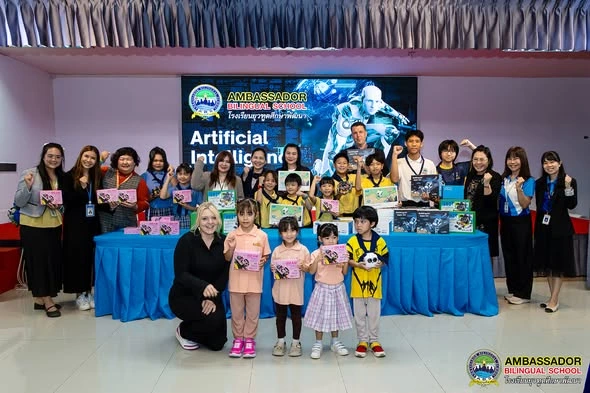
At the lower end sit the bilingual and Thai-group schools: Ambassador Bilingual School, Varee Chiang Mai International School, SATIT International Bilingual School and Americana Chinese International School. These schools serve a mixed Thai and international intake, operate at a different cost base, and offer genuine international qualifications at a level a self-funding family can sustain over many years. For families planning a long stay in Thailand, they deserve more consideration than they usually get.
The middle band is where most fully international provision sits: Lanna International School, Nakornpayap International School, Unity Concord International School, British Concordance International School, Christliche Deutsche Schule Chiang Mai and Grace International School. Full international curricula, small cohorts, and fees that in Bangkok would not buy an established international place at all.
The upper band holds Chiang Mai International School, American Pacific International School and Prem Tinsulanonda International School — the largest campuses, the widest co-curricular programmes and, at the latter two, boarding. Prem's IB continuum and extensive Mae Rim grounds place it at the top of the local market, though still well below Bangkok's top tier.
As everywhere, fees scale by year group. A published range means the low figure applies in the early years and the high one in the final years, so budget for the year your child is entering and for the years that follow.
What sits above tuition
The published tuition figure is the largest number but not the only one, and against Chiang Mai's lower base the extras carry proportionally more weight than they would in Bangkok.
Expect an application fee per child, non-refundable and payable whatever the outcome. A one-off enrolment or registration charge on first entry, which at the upper-band schools is a meaningful sum. Then the recurring items: the school bus, charged by distance band and effectively unavoidable if you live away from your campus; lunch, usually either a set catering charge or a top-up account; uniform; books, materials and in the senior years a device.
From the middle years onward, trips and residentials appear, and in the final years examination entry fees for IGCSE, A Level, AP or the IB Diploma, which are charged per subject and add up quickly for a full Diploma programme.
The practical consequence is the same everywhere: your first year costs materially more than your second, because the one-off charges land together with the move itself. A family arriving with two or three children feels this sharply, and it is worth having the cash planned rather than discovered in week three.
Many Chiang Mai families drive their own children rather than use a bus, which genuinely works here in a way it does not in Bangkok — but factor in a vehicle, fuel and a parent's time twice a day before treating it as a saving.
The Bangkok comparison, done honestly
Families weighing Chiang Mai against Bangkok are usually weighing two different things at once: a fee difference and a lifestyle difference. Both are real, and the fee difference is easy to overstate if you only look at tuition.
On tuition alone the gap is large and consistent. Chiang Mai's upper band sits below where Bangkok's established international sector begins, and the middle band is a different world entirely from the capital's top tier. Add housing — the single biggest household cost in either city — and the total difference for a family of four is considerable.
What Bangkok buys for the premium is breadth: larger cohorts, more subject options at A Level and the Diploma, deeper sports and arts programmes, more specialist staff, and a bigger pool of schools so that a mid-year arrival has somewhere to go. For a family with a child heading into the final two years with an unusual subject combination, or a child who needs a specific kind of learning support, that breadth can be decisive.
What Chiang Mai buys is sustainability. A self-funding family can educate two or three children here through to eighteen on an income that would not cover one Bangkok place at an equivalent school. If your plan is a long stay rather than a three-year posting, that is not a lesser option — it is often the better one.
Run both budgets properly before deciding. Our Thailand fees guide covers the national picture, and every Chiang Mai school's current figure is on our city directory.
Not sure which schools fit your family?
Choosing an international school depends on your child's age, curriculum preference, location and budget. Tell us what you're looking for and we'll help you identify schools worth considering.
Paying from abroad, instalments and refund policies
Because so many Chiang Mai families fund tuition personally, the mechanics of payment deserve attention that a corporate-package family could safely ignore.
Invoices are almost always denominated in Thai baht, whatever currency your income arrives in. If you earn in dollars, euros or sterling, exchange-rate movement between the invoice date and the settlement date is your risk, not the school's. Over a decade of termly transfers that volatility becomes a genuine budgeting variable, and families who remit regularly usually end up opening a Thai baht account and timing conversions deliberately rather than transferring at whatever rate applies on the deadline. Check what your own bank charges per international wire, and whether the school's receiving bank deducts anything at the far end — both are easy to overlook and neither appears on any fee schedule.
Instalment structures differ. Some Chiang Mai schools bill termly, others per semester, and a handful offer a modest reduction for settling the whole academic year upfront. If cash flow is uneven — common for freelancers and business owners here — ask whether monthly arrangements are possible. Several schools accommodate this quietly for established families even where it is not advertised.
Finally, read the withdrawal clause before you sign anything. Ask how much notice is required to leave without penalty, whether prepaid tuition is refunded pro rata or forfeited, and what happens to your deposit. Families whose circumstances change mid-year — a visa issue, a business that does not work out, a return home — discover these terms at the worst possible moment. Getting them in writing at enrolment costs nothing.
Turning published schedules into a real budget
Because every school publishes, you can complete this exercise from abroad before you commit to anything.
For each shortlisted school, build three totals. A first-year total: tuition for the exact year group, application fee, enrolment charge, bus for the neighbourhood you expect to live in, lunch, uniform, books and devices, plus any refundable deposit. A steady-state second-year total, which drops once the one-off items fall away. And a senior-year total at the top of the fee range with examination entry included, which tells you what the last two years actually cost.
Then ask each school two questions the schedule will not answer: what fee increases have been applied in each of the last three years, and are there sibling discounts or bursaries you may qualify for. For a self-funding family with a young child, a school's increase history compounds over a decade and matters as much as today's number.
Finally, sense-check the total against everything else. Flights home, health insurance, a vehicle if you plan to drive the school run, and the university costs that follow. Chiang Mai's appeal is that a family can do all of this comfortably rather than stretch to the school fee and squeeze everything else — losing that margin defeats the point of choosing Chiang Mai in the first place.
Frequently Asked Questions
How much do international schools in Chiang Mai cost?
All 13 international schools in Chiang Mai publish a fee schedule, which is unusual and makes the market genuinely comparable. The spread runs from bilingual and community-oriented schools at the lower end, through the mainstream American and British schools in the middle, to the IB and boarding schools at the top. Every current figure is on each school's ESG profile and directly on the school's own site.
How do Chiang Mai fees compare with Bangkok?
Substantially lower across the whole range. The most expensive school in Chiang Mai sits well below Bangkok's top tier, and the middle of Chiang Mai's market sits below the bottom of Bangkok's established international sector. Combined with much lower housing costs, this is the main financial reason families relocate north.
What is charged on top of tuition in Chiang Mai?
Expect an application fee, a one-off enrolment or registration charge on first entry, and then bus, lunch, uniform, books or devices, trips, and examination entry fees for IGCSE, A Level, AP or the IB Diploma in the senior years. Some schools also hold a refundable deposit. These are smaller in absolute terms than in Bangkok but proportionally just as significant against a lower tuition base.
Does boarding cost extra?
Yes. Prem Tinsulanonda International School and American Pacific International School both offer boarding, and at both it is charged separately from tuition. Ask for a schedule that separates tuition, boarding, meals, laundry and weekend activities so you can compare a boarding place fairly against a day place plus transport and housing.
Are there scholarships or discounts in Chiang Mai?
Some schools offer sibling discounts, and a few offer bursaries or scholarships, particularly the schools with missionary and NGO communities where reduced fees for those families are a long-standing arrangement. None of this is standard across the market. Ask each school directly and get any reduction confirmed in writing as part of your offer.
Do most Chiang Mai families have employer-funded fees?
Less often than in Bangkok. Chiang Mai's international families skew towards remote workers, entrepreneurs, NGO and mission staff and retirees with school-age children, so a much higher proportion pay from household income. That is precisely why fee transparency matters here more than in a corporate-package market.
Do Chiang Mai school fees rise each year?
Schools review fees annually, typically notifying families in the spring for the following academic year. Ask each shortlisted school what its increases have been over the last three years — for a self-funding family, the trajectory matters as much as the current figure, especially if you have a child who will go all the way through to the senior years.
How should we budget for a full year in Chiang Mai?
Build a first-year total per school: tuition for the exact year group, application fee, enrolment charge, bus for your actual neighbourhood, lunch, uniform, devices and trips. Then a second-year total without the one-off items, and a senior-year total including examination entry. Because every Chiang Mai school publishes fees, you can do this comparison completely before you arrive.
International schools in Lower band
- Ambassador Bilingual School
- Varee Chiang Mai International School
- SATIT International Bilingual School
- Americana Chinese International School
International schools in Middle band
- Lanna International School
- Nakornpayap International School
- Unity Concord International School
- British Concordance International School
- Christliche Deutsche Schule Chiang Mai
- Grace International School
International schools in Upper band and boarding
- Chiang Mai International School
- American Pacific International School
- Prem Tinsulanonda International School
Want a Chiang Mai shortlist that fits your budget?
Tell us your budget, your children's ages and your arrival date — we'll show you which Chiang Mai schools are genuinely in range and have places.
Related guides
- International Schools in Chiang Mai: A Complete Guide for Expat Families
- Boarding Schools in Chiang Mai: What Families Should Know
- International School Fees in Thailand: How the Costs Really Work
- International Schools in Thailand: A Parent's Guide
- Boarding Schools in Thailand: A Guide for Parents
- International School Scholarships and Fee Reductions in Thailand