Indian (CBSE) Schools in Saudi Arabia: A Parent's Guide
Saudi Arabia's large Indian expatriate community is served by a number of CBSE-curriculum schools in both Riyadh and Jeddah. Here's how these schools generally work, what CBSE involves, how daily life and the school calendar play out locally, how these schools compare with British and American options, and what to check before enrolling.

Quick answer
A guide to Indian CBSE schools in Saudi Arabia: how the curriculum works in Riyadh and Jeddah, admissions, fees, and what to verify before enrolling.
At a glance
- Country: Saudi Arabia
- Sections: 12
- Questions answered: 10
- Schools listed: 2
- Read time: 13 min read
Why CBSE schools are important in Saudi Arabia
Saudi Arabia is home to one of the largest Indian expatriate communities in the Gulf, and CBSE (Central Board of Secondary Education) curriculum schools have long served that community in both Riyadh and Jeddah. These schools follow the same curriculum framework used by CBSE-affiliated schools in India, which many Indian families value both for continuity with schooling back home and for the possibility of a smoother return to the Indian education or examination system if the family relocates again.
While these schools are generally described as Indian or CBSE schools, individual schools can differ in facilities, class sizes, extracurricular provision and exact affiliation status, so always confirm current details directly with each school rather than assuming uniformity across the sector. Many of the largest CBSE schools in both cities have grown substantially over recent decades alongside the Indian community itself, and some now enrol very large numbers of students across multiple sections per grade, which is worth bearing in mind when thinking about class sizes and the overall feel of a school.
What the CBSE curriculum generally involves
What to ask about a CBSE school
- Current CBSE affiliation status and when it was last renewed
- Which additional languages, alongside Hindi and English, are taught
- Whether the school offers any pathway beyond Class 12, such as support for competitive entrance exams
- How the school structures assessments leading up to the Class 10 and Class 12 board examinations
- How many sections run per grade, and typical class sizes for your child's specific grade
The CBSE curriculum generally follows the structure used across CBSE-affiliated schools in India, with study through to Class 10 board examinations and then Class 12 board examinations, which serve as the main school-leaving qualification and the basis for university admission in India and, often, elsewhere. Schools affiliated with CBSE are required to follow the board's prescribed syllabus and examination structure, though how individual schools supplement this with additional subjects, extracurricular activities or language options can vary.
Because CBSE affiliation is granted and periodically reviewed by the board in India, ask the specific school directly for confirmation of its current affiliation status, and clarify whether the school also offers any additional qualifications or pathways alongside the standard CBSE syllabus.
How CBSE schools differ between Riyadh and Jeddah
Both Riyadh and Jeddah have established CBSE schools serving their respective Indian expatriate communities, and the specific school available to your family will generally depend more on your neighbourhood and the individual school's reputation, facilities and space availability than on any general difference between the two cities' CBSE sectors as a whole. Ask directly about location relative to your planned neighbourhood, since commuting distance can be a significant practical factor for families choosing a CBSE school, particularly given how large some of these schools' catchment areas can be across a sprawling city.
School size, the number of sections per grade, and the specific extracurricular and sports facilities on offer can also vary meaningfully between individual CBSE schools in each city, so a direct comparison of specific schools is more useful than a general city-level comparison.
Admissions at CBSE schools
Admission into a CBSE school in Saudi Arabia typically involves submitting the child's previous school records and transfer certificate, and may include an informal assessment or interview, particularly for entry into higher grades. Because CBSE schools in Riyadh and Jeddah are in high demand relative to the number of places available in some grades, especially given the size of the Indian expatriate community, popular schools can carry waiting lists, and early application is generally advisable.
Our guide to how to apply to an international school in Saudi Arabia covers documentation and the general admissions process in more depth and applies broadly to CBSE schools as well as other curricula, though always confirm the specific requirements directly with each school.
Fees at CBSE schools
Fees at CBSE schools in Saudi Arabia vary between individual schools, and are generally, though not universally, positioned differently in the market compared to British, American or IB schools; this should not be assumed without checking, since fee structures depend on the individual school rather than curriculum type alone. Request the current full fee schedule directly, covering tuition plus registration, deposit and any additional costs such as transport, uniform, books and examination fees for CBSE board examinations.
Our guide to school fees in Saudi Arabia covers the general fee landscape across curricula, though CBSE schools are worth asking about specifically given the range of fee structures across the sector.
Not sure which schools fit your family?
Choosing an international school depends on your child's age, curriculum preference, location and budget. Tell us what you're looking for and we'll help you identify schools worth considering.
Continuity with schooling in India
One of the main reasons families choose a CBSE school in Saudi Arabia is to preserve continuity with the Indian education system, whether because the family expects to return to India during the child's schooling or because older children are preparing for Indian competitive entrance examinations that build on the CBSE syllabus. If continuity with a specific Indian state or CBSE-affiliated school back home matters to your family, ask the Saudi-based school directly how closely its syllabus pacing matches what your child would be studying in India at the same grade level, since some variation in pacing and content coverage is normal even within CBSE-affiliated schools.
Families moving to Saudi Arabia partway through a school year should contact the receiving school as early as possible to discuss transfer certificates, current syllabus progress and any gap that may need to be addressed.
The school week, calendar and daily routine
CBSE schools in Saudi Arabia generally follow the national weekend of Friday and Saturday, meaning the school week runs Sunday to Thursday, and school hours and the daily schedule may be adjusted during the month of Ramadan, when many schools operate shortened days. Because the academic calendar in Saudi Arabia does not follow the same annual rhythm as schools in India, families relocating from India should not assume term dates, exam schedules or holiday timing will match what they are used to; request the current academic calendar directly from the specific school.
Many CBSE schools also mark festivals and cultural events familiar to Indian families through the school year, alongside observing public holidays and school breaks set locally, so ask the school directly how its calendar is structured if this matters to your family's planning.
Extracurricular activities and community life
Many CBSE schools in Saudi Arabia offer a range of extracurricular activities, including sports, arts, and academic clubs, alongside more specific offerings such as classical Indian dance, music or preparation support for competitive examinations. The scale and quality of these offerings vary considerably between schools, often correlating with the size and age of the school's campus, so ask directly what is available for your child's specific age group rather than assuming based on the school's overall size or reputation.
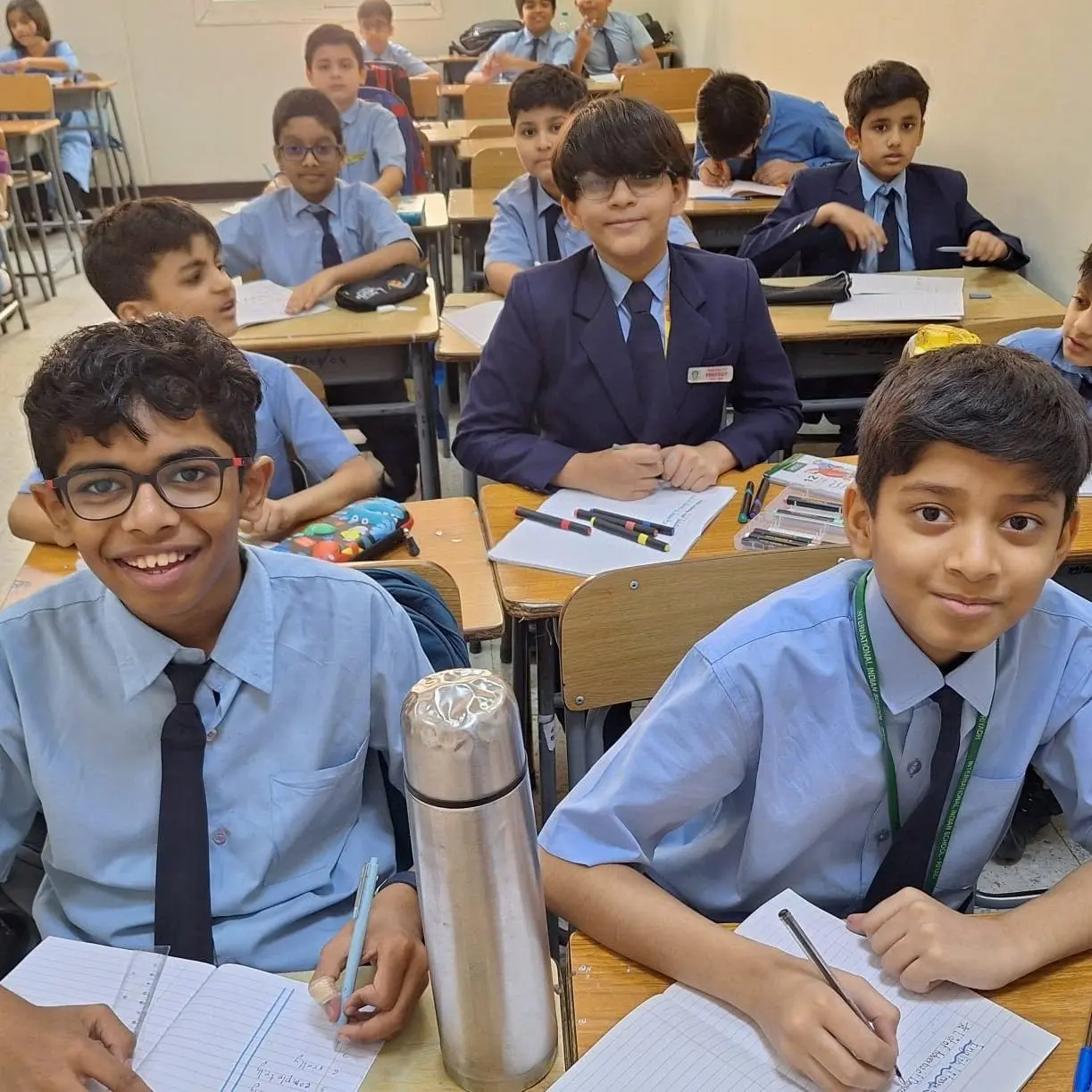
Given the scale of the Indian expatriate community in both cities, CBSE schools often serve as an important hub of community life beyond academics, with active parent associations and cultural events; this can be a significant source of social connection for newly arrived families, and it is worth asking a prospective school about its parent community and any orientation support for new families.
Language and cultural considerations
CBSE schools in Saudi Arabia generally teach primarily in English, alongside Hindi and often a regional Indian language option, reflecting the CBSE syllabus structure used in India; the specific language options available vary by school, so confirm directly which languages are taught and at what levels. These schools also generally maintain cultural practices and celebrations familiar to Indian families, which some parents value for their children's sense of continuity and community, though the specific programming varies from school to school.
Families who are not Indian but are considering a CBSE school for curriculum continuity, cost, or other reasons should ask directly about the school's approach to supporting children without a Hindi language background, since this varies.
CBSE compared with British, American and IB options
Families weighing a CBSE school against a British, American or IB alternative in Saudi Arabia are often making a genuinely different kind of decision than one purely about academic quality, since the choice tends to hinge more on future plans, language of instruction and continuity than on which curriculum is objectively stronger. A family confident it will return to India, or one with older children already progressing through CBSE and preparing for Indian entrance exams, generally gains more from staying within the CBSE system than from switching curricula for the sake of an international label.
Conversely, families uncertain about their next move, or planning to relocate to a country where British, American or IB qualifications are more immediately recognised, may lean toward one of those curricula instead, even though CBSE schools in Saudi Arabia are well established and academically respected in their own right. There is no single right answer here, and it is worth discussing openly as a family, including with older children old enough to have a view, since the qualification a child eventually sits can meaningfully shape their options a few years down the line.
Questions to ask before choosing a CBSE school
Before shortlisting a CBSE school, confirm its current CBSE affiliation status, ask about typical class sizes and the number of sections per grade, and request information on facilities such as science laboratories, libraries and sports provision. Ask about the school's approach to supporting entry into competitive Indian entrance examinations if that is relevant to your family's plans, and clarify the current waiting list situation for your child's specific grade.
Finally, ask about transport arrangements if the school is not within easy reach of your planned neighbourhood, since commuting distance is a common practical consideration for families choosing among CBSE schools in Riyadh and Jeddah.
Board results, competitive exams and what comes after Class 12
For many families, a CBSE school's track record in the Class 10 and Class 12 board examinations is one of the more visible ways to compare options, though a single year's results, or a school's own summary of them, should be treated as one data point rather than a full picture of academic quality. Ask a shortlisted school directly for its results over several recent years rather than just the most recent one, and ask how it supports students who do not perform as strongly as expected in a mock or practice round leading up to the boards.
Beyond the boards themselves, many families with older children are also thinking ahead to competitive entrance examinations for engineering, medicine or other professional pathways in India, and some CBSE schools in Saudi Arabia offer dedicated coaching or preparation support alongside the regular curriculum, while others do not and expect families to arrange this separately, sometimes through external coaching centres or online programmes. Ask directly whether any in-house preparation exists, how it is timetabled alongside regular coursework, and whether there is an additional cost, since this varies considerably from one school to the next and can represent a meaningful extra commitment of both time and money in the senior years.
Families whose children are more likely to pursue higher education outside India, whether in Saudi Arabia, the Gulf more broadly, or further afield, should also ask how the school's counselling or guidance provision, where it exists, supports applications beyond the Indian system, since this is not always a strong focus at every CBSE school and provision varies. Where a school's main strength and orientation is toward Indian universities and entrance exams, that is a legitimate and valuable focus for many families, but it is worth confirming it matches your own child's likely path before committing for the long term.
Frequently Asked Questions
What does CBSE mean and why do families choose it in Saudi Arabia?
CBSE stands for the Central Board of Secondary Education, the curriculum and examination board widely used across India. Families in Saudi Arabia often choose CBSE schools for continuity with the Indian education system, particularly if they expect to return to India or if older children are preparing for Indian competitive entrance examinations built on the CBSE syllabus.
Are CBSE schools only for Indian nationals?
No, though the majority of students at CBSE schools in Saudi Arabia are typically from Indian expatriate families. Some non-Indian families choose CBSE schools for other reasons, such as cost or curriculum preference, but should ask directly about language support, since instruction includes Hindi alongside English at most CBSE schools.
How many CBSE schools are there in Riyadh and Jeddah?
Both cities have CBSE curriculum schools serving their Indian expatriate communities, though exact numbers and capacity change over time. Contact schools directly or check current school directories for up-to-date information on options in your specific neighbourhood.
Do CBSE schools in Saudi Arabia cost less than British or American schools?
Fee structures vary by individual school rather than by curriculum type in every case, though CBSE schools are often, though not universally, positioned differently in the market. Always request the current fee schedule directly from each school rather than assuming a general price difference by curriculum.
Can my child transfer from a CBSE school in India directly into one in Saudi Arabia?
Generally yes, since both schools follow the same CBSE syllabus framework, though exact pacing and content coverage can vary somewhat between individual schools. Bring the child's transfer certificate and recent school records, and contact the receiving school directly to confirm current syllabus progress and any gap that may need addressing.
Do CBSE schools in Saudi Arabia prepare students for Indian entrance exams?
Some CBSE schools offer support or coaching oriented toward competitive Indian entrance examinations, but this varies significantly between schools and is not universal. Ask the specific school directly what support it offers if this is a priority for your family.
What language is used for instruction at CBSE schools in Saudi Arabia?
Instruction is generally primarily in English, with Hindi also taught as part of the CBSE syllabus and sometimes a regional Indian language offered as an additional option. The specific language offerings vary by school, so confirm directly which languages are taught and at what levels.
What does the school week and calendar look like at CBSE schools in Saudi Arabia?
Most CBSE schools follow the national weekend of Friday and Saturday, so the school week runs Sunday to Thursday, and school hours may be adjusted during Ramadan. Term dates and holidays do not necessarily mirror the calendar used by schools in India, so request the current academic calendar directly from the school.
How do I check if a school is currently CBSE-affiliated?
Ask the school directly for confirmation of its current CBSE affiliation status and when it was last renewed, since affiliation is reviewed periodically by the board in India. Do not rely solely on older marketing material, and verify directly with the school before applying.
How do I decide between a CBSE school and a British, American or IB school?
This decision usually depends more on your family's future plans, such as whether you expect to return to India, than on academic quality alone. Consider language of instruction, continuity with prior schooling, and where your child is likely to continue their education, and discuss the choice directly with schools you are considering.
International schools in Riyadh
International schools in Jeddah
Get matched with the best school in Saudi Arabia
Tell us what you're looking for and we'll recommend the international schools that genuinely fit your family.