Best Areas of Dubai for Expat Families
Dubai has no single expat school district. ESG profiles 63 international schools across the city, distributed over seven broad residential clusters — the Jumeirah and Umm Suqeim coastal strip, Al Barsha and Tecom, the Marina, JLT and Emirates Living belt, the inland villa communities of Arabian Ranches, Dubai Hills and Motor City, the Meydan, Nad Al Sheba and Sobha Hartland corridor, Mirdif and the Deira side, and the Jebel Ali, Al Furjan and Dubai South corridor. Because school availability in a given year group is the real constraint, the practical order is to secure the school place first and choose housing inside its bus catchment second. This guide sets out each cluster, the schools that anchor it, the housing you can expect and the commute you are actually signing up for.
Quick answer
Compare Dubai's expat family communities — Jumeirah, Al Barsha, Marina and Emirates Living, Arabian Ranches and Dubai Hills, Meydan and Mirdif — by the international schools that serve them.
At a glance
- City: Dubai
- Sections: 9
- Questions answered: 10
- Schools listed: 44
- Read time: 12 min read
How Dubai actually works for a family with children
The order that works
- Shortlist three or four schools that have genuine availability in your children's year groups
- Confirm a place, or at least an assessment date, before signing a residential lease
- Ask each school for the bus route and scheduled pick-up time for the specific addresses you are considering
- Check the commute of the working parent separately — school run and office run rarely point the same way
- Use short-term or serviced accommodation for the first two or three months if the school decision is unresolved
Dubai is a linear city built along a coast, and almost every practical decision a relocating family makes follows from that shape. The older districts sit on the coastal strip, running from Deira and Bur Dubai through Jumeirah and Umm Suqeim towards Al Sufouh and the Marina. Behind them lies a second, newer band along Al Khail Road and Sheikh Mohammed Bin Zayed Road, where most of the villa communities built since the mid-2000s are located. Schools are distributed across both bands rather than concentrated in one district, and the newer communities were frequently master-planned with a school inside them from the outset.
That matters because it changes the usual relocation logic. In many cities you choose a neighbourhood and accept whichever schools serve it. In Dubai the pattern is closer to the reverse: you secure a school place in the year group your child needs, then choose housing within a workable distance of it. Availability is the constraint that catches families out. Popular schools fill particular year groups long before the academic year begins, and a family that has already committed to a villa in the wrong part of the city has removed most of its own options.
Jumeirah, Umm Suqeim and the coastal strip
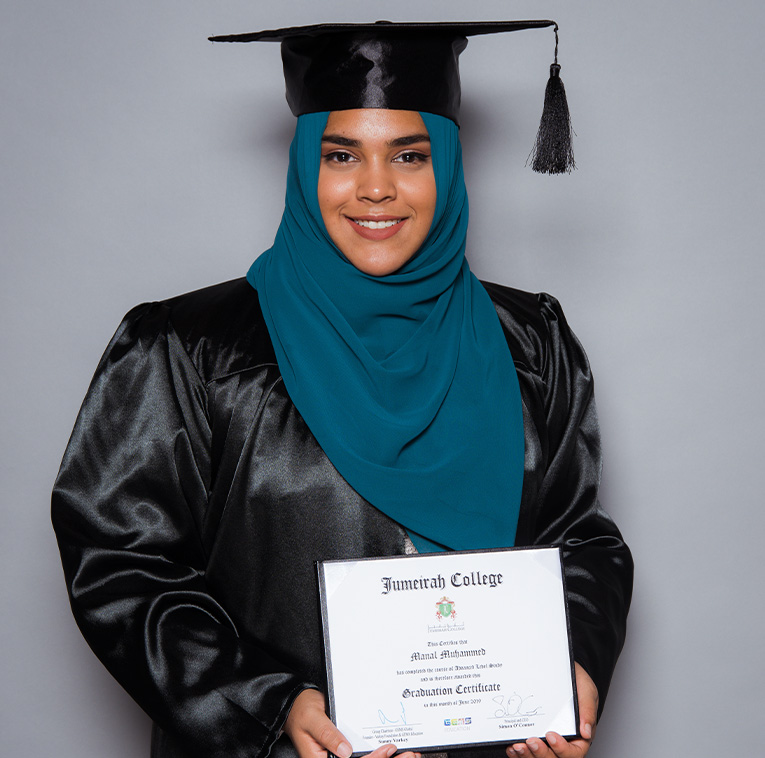
The coastal strip between Jumeirah and Umm Suqeim is the closest Dubai has to an established family neighbourhood. Housing is predominantly older low-rise villas with mature gardens, alongside newer townhouse developments, and the density of schools within a short drive is the highest in the city. Jumeirah College, Jumeirah English Speaking School, Safa British School, Emirates International School Jumeirah, Dubai British School Jumeira, Horizon International School and The English College Dubai all sit in or immediately beside this corridor.
The appeal is convenience and character: beach access, walkable clusters of cafés and clinics, and short school runs that do not involve a motorway. The trade-offs are property age, which varies enormously between individual villas, and rental cost per square metre, which is high relative to the inland communities. Families who prioritise being able to reach several schools within fifteen minutes — useful when siblings end up in different schools, which happens more often than parents expect — tend to gravitate here.
Al Barsha, Al Barsha South and Tecom: the widest curriculum choice
If your curriculum decision is not yet settled, the Al Barsha and Al Barsha South band is the most forgiving place to live. Within a few kilometres you have American School of Dubai, Kings' School Al Barsha, GEMS Wellington International School, Nord Anglia International School Dubai, Dwight School Dubai, GEMS Founders School Dubai and Bloom World Academy Dubai — British, American and IB systems side by side, across a wide range of fee levels.
Housing is mixed: older villa compounds in Al Barsha itself, apartments in Tecom and Barsha Heights, and newer townhouse stock towards Arjan and Al Barsha South. It is a genuinely central position, which shortens most commutes in both directions, and it is the area we most often suggest to families who expect to change schools after their first year in the country — a common outcome when a child's needs turn out to differ from what the family assumed before arriving.
Dubai Marina, JLT and Emirates Living
The Marina and Jumeirah Lakes Towers are apartment districts, and plenty of families live in them successfully, particularly those with younger children or those who value walkability and a short commute to Media City, Internet City or the DIFC end of Sheikh Zayed Road. Immediately inland sit the Emirates Living communities — The Springs, The Meadows, The Greens and Emirates Hills — which are villa and townhouse districts with schools built into them.
Dubai British School serves the Emirates Hills and Springs side, Emirates International School Meadows sits within The Meadows, and Regent International School Dubai serves The Greens. Kings' School Dubai and Raffles World Academy Dubai are within reach on the Umm Suqeim side. The main constraint here is peak-hour traffic on Hessa Street and the Al Khail interchanges, which can turn a five-kilometre school run into a twenty-five-minute one between 07:15 and 08:00.
Not sure which schools fit your family?
Choosing an international school depends on your child's age, curriculum preference, location and budget. Tell us what you're looking for and we'll help you identify schools worth considering.
Arabian Ranches, Dubai Hills and the villa communities
The inland villa belt — Arabian Ranches, Dubai Hills Estate, Mudon, Motor City, Damac Hills and the surrounding developments — is where families most often end up when space, gardens and community facilities matter more than proximity to the coast. These communities were planned around amenities, and several were planned around a specific school. Ranches Primary School Dubai sits inside Arabian Ranches and is one of the city's deliberately primary-only campuses. Jebel Ali School serves Damac Hills, GEMS Metropole School Motor City serves Motor City, and GEMS Wellington Academy Al Khail and Safa Community School Dubai sit on the Al Quoz and Al Barsha South edge of the belt.
The honest trade-off is dependence on the car. These are not walkable districts in the way parts of Jumeirah are, weekend trips into the older city take longer, and a family with two working parents on opposite sides of Dubai will find this belt harder than a central position. In exchange, the housing is newer, the outdoor space is real, and children's social lives tend to be built around the community rather than around scheduled play dates across the city.
Meydan, Nad Al Sheba, Sobha Hartland and Silicon Oasis
The inland corridor running from Meydan and Nad Al Sheba through Sobha Hartland and out to Dubai Silicon Oasis contains several of the city's newer premium campuses and is the fastest-changing part of the school map. Repton School Dubai and Kings' School Nad Al Sheba serve Nad Al Sheba and Meydan; Hartland International School and North London Collegiate School Dubai sit within Sobha Hartland; Swiss International Scientific School occupies Al Jaddaf on the creek side; GEMS Modern Academy Dubai is established in Nad Al Sheba; and GEMS Wellington Academy Silicon Oasis anchors the Silicon Oasis end.
This corridor suits families working in Business Bay, Downtown or the DIFC, since the drive inland runs against the heaviest flow. Housing is dominated by newer apartment and townhouse stock rather than mature villas, and some communities are still filling out, so it is worth visiting at the times of day you would actually use the roads rather than judging from a weekend viewing.
Mirdif, Al Twar, Al Mizhar and the Deira side
North-east Dubai is consistently underrated by newly arriving families, largely because relocation material tends to focus on the newer coastal and inland developments. Mirdif in particular has a long-established expatriate family population, low-rise villa housing at materially lower rents than the western side of the city, and a good spread of schools: Uptown International School, Star International School Mirdif, Star International School Al Twar, Al Mizhar American Academy Dubai and GEMS Royal Dubai School are all within the district or immediately adjacent, with Deira International School in Al Garhoud a short run away.
This side of the city is the practical choice for families whose working parent commutes towards Sharjah, Dubai Airport or the Festival City and Garhoud business districts. It is the wrong choice if that commute runs to Media City or Jebel Ali, both of which mean crossing the entire city twice a day.
Jebel Ali, Al Furjan, Dubai South and the JVT corridor
The south-western end of Dubai has grown substantially and now supports a full set of schools of its own. The Arbor School Dubai in Al Furjan, Arcadia School Dubai and Sunmarke School Dubai in Jumeirah Village Triangle, South View School Dubai out towards Remraam, GEMS FirstPoint School Dubai in The Villa and Clarion School Dubai in Dubai Investment Park mean that a family living here no longer has to drive inbound every morning.
The defining advantage is the Abu Dhabi commute. If one parent works in Abu Dhabi or at Jebel Ali port, living at this end of the city removes forty minutes or more from each daily journey, and school fees in this corridor also tend to sit below the coastal average. The disadvantage is distance from the older city and from the airport, which matters more than families expect if they travel frequently or have visitors throughout the year.
The questions to ask before you sign anything
Before signing a lease
- School place or assessment date confirmed for every child, in the correct year group
- Bus route, pick-up time and journey duration confirmed in writing for your exact address
- Latest KHDA inspection report read in full, including phase-level commentary
- Rent payment terms, cheque count and chiller charges confirmed
- School run and work commute driven at weekday peak, not at the weekend
Beyond the school itself, a handful of checks separate families who settle quickly from families who move again after twelve months. Ask each shortlisted school for the actual bus route serving the specific addresses you are considering, together with the scheduled pick-up time, rather than accepting that a route exists. Check the KHDA inspection report for each school individually and read the phase-specific commentary rather than the headline rating, since a school can be materially stronger in primary than in secondary or the reverse.
On the housing side, confirm the number of cheques the landlord requires and whether the rent is payable annually in advance, since this affects cash flow far more than the headline figure. Check chiller charges, which are billed separately in many buildings and communities and can be significant in summer. And drive the school run and the work commute at 07:30 on a weekday before committing, not at the weekend — Dubai's roads behave completely differently at those two times, and the difference is what determines whether an area works for your family.
Frequently Asked Questions
Where do most expat families with school-age children live in Dubai?
Six clusters absorb the majority: the Jumeirah and Umm Suqeim strip along the older coast, Al Barsha and Tecom in the centre, the Marina, JLT and Emirates Living belt to the south-west, the villa communities of Arabian Ranches, Dubai Hills, Motor City and Mudon, the Meydan, Nad Al Sheba and Sobha Hartland corridor inland, and the Mirdif, Al Twar and Deira side to the north-east. Which of them suits you is decided far more by your school shortlist and your commute to work than by the area's marketing.
Should we choose the school first or the neighbourhood first?
The school first, then a home inside its bus catchment or a short drive of it. Dubai's road network is fast off-peak and slow at 07:30, and Sheikh Zayed Road, Al Khail Road and the Business Bay crossings are the pinch points. Families who sign a villa lease before securing school places routinely discover that the school they wanted has no space in the year group they need, and that the school that does have space is on the wrong side of the city.
Is it realistic to live in Dubai Marina with children?
Yes, and many families do, though it is apartment living rather than villa living. The Marina and JLT sit close to Emirates International School Meadows, Regent International School and Dubai British School in the Emirates Living communities, and within a manageable run of Al Barsha and Al Barsha South. The trade-offs are outdoor space, parking and the school-run traffic around the Al Khail and Hessa Street junctions in term time.
Which areas suit families who want a villa and a garden?
Arabian Ranches, Dubai Hills Estate, Mudon, Motor City, The Springs and Meadows, Al Furjan, Jumeirah Village Triangle and Damac Hills are the recognised family villa communities, and most were planned with a school inside or beside the community. Ranches Primary School, Jebel Ali School, GEMS Metropole School Motor City, Arcadia School, Sunmarke School and The Arbor School all sit in or immediately beside villa districts of this type.
How much does the school bus change what is workable?
Considerably. Most Dubai schools run extensive bus networks that reach well beyond their own community, so an address that looks impossible on a map is often served. The question to ask admissions is never whether a route exists but what the scheduled pick-up time is for your exact address and how long the child is on the bus. Forty minutes each way is common and tolerable; seventy minutes for a five-year-old is not.
Are older areas like Jumeirah and Umm Suqeim still good for families?
They remain among the strongest school catchments in the city. Jumeirah College, Jumeirah English Speaking School, Safa British School, Safa Community School, Emirates International School Jumeirah, Dubai British School Jumeira and Horizon International School are all within or close to that coastal strip. Housing is a mix of older low-rise villas and newer townhouses, generally with more mature landscaping and shorter beach access than the newer inland communities.
What about families working in Abu Dhabi or the northern emirates?
If one parent commutes daily to Abu Dhabi, the southern and western side of Dubai — Dubai South, Jebel Ali, Al Furjan, Damac Hills and Dubai Investment Park — cuts a substantial amount from that drive, and schools such as GEMS FirstPoint School Dubai, Clarion School Dubai, South View School Dubai and The Arbor School Dubai sit on that side. For Sharjah-side commutes, Mirdif, Al Twar, Al Mizhar and Deira are the practical choices.
Do KHDA inspection ratings vary by area?
Not by area as such, but the distribution of ratings is uneven across the map because schools cluster by age and price point. Older established districts contain more long-standing schools with several inspection cycles behind them, while the newest communities contain newer schools whose ratings are still settling. Always read the individual school's most recent KHDA report rather than judging a district by reputation.
How far ahead should we secure housing?
Later than most families expect. Dubai leases are typically annual and paid in a small number of cheques, and breaking one is expensive, so a short-term or serviced arrangement for the first two or three months is usually the cheaper mistake. Confirm the school place, ride or map the actual bus route once, then sign a twelve-month lease around it.
Which area is best if we have not chosen a curriculum yet?
Al Barsha, Al Barsha South and the Dubai Hills corridor give the widest curriculum choice inside a short radius — British, American and IB campuses all sit within a few kilometres of each other there — so they are the safest place to live if your curriculum decision may change after a year in the country. The coastal Jumeirah strip is a close second.
International schools in Jumeirah, Umm Suqeim and the coastal strip
- Jumeirah College
- Jumeirah English Speaking School
- Safa British School
- Emirates International School Jumeirah
- Dubai British School Jumeira
- Horizon International School Dubai
- The English College Dubai
International schools in Al Barsha, Al Barsha South and Tecom
- American School of Dubai
- Kings' School Al Barsha
- GEMS Wellington International School
- Nord Anglia International School Dubai
- Dwight School Dubai
- GEMS Founders School Dubai
- Bloom World Academy Dubai
International schools in Dubai Marina, JLT and Emirates Living
- Dubai British School
- Emirates International School Meadows
- Regent International School Dubai
- Kings' School Dubai
- Raffles World Academy Dubai
International schools in Arabian Ranches, Dubai Hills, Motor City and the villa belt
- Ranches Primary School Dubai
- Jebel Ali School
- GEMS Metropole School Motor City
- GEMS Royal Dubai School
- GEMS Wellington Academy Al Khail
- Safa Community School Dubai
International schools in Meydan, Nad Al Sheba, Sobha Hartland and Silicon Oasis
- Repton School Dubai
- Kings' School Nad Al Sheba
- Hartland International School
- North London Collegiate School Dubai
- Swiss International Scientific School
- GEMS Wellington Academy Silicon Oasis
- GEMS Modern Academy Dubai
International schools in Mirdif, Al Twar, Al Mizhar and Deira
- Uptown International School
- Star International School Mirdif
- Star International School Al Twar
- Al Mizhar American Academy Dubai
- Deira International School
- The Winchester School Dubai
International schools in Jebel Ali, Al Furjan, Dubai South and the JVT corridor
- The Arbor School Dubai
- Arcadia School Dubai
- Sunmarke School Dubai
- South View School Dubai
- GEMS FirstPoint School Dubai
- Clarion School Dubai
Not sure which part of Dubai fits your school shortlist?
Tell us your children's ages, your budget and where in Dubai you may live or work, and we'll show you which schools are genuinely within a workable commute.
Related guides
- Primary Schools in Dubai: Choosing for Ages 3 to 11
- Secondary Schools in Dubai: Choosing for Ages 11 to 18
- British Schools in Dubai: The Complete Parent Guide
- International School Fees in Dubai: What Families Actually Pay
- International Schools in the UAE: A Parent's Guide
- School Inspection Ratings in the UAE: KHDA, ADEK and Beyond