American Curriculum Schools in Qatar: A Parent's Guide
American curriculum schools are a well-established option in Doha, offering a US-style high school diploma and, at some schools, AP courses. Here's how they generally work and what to check before applying.

Quick answer
How American curriculum schools in Qatar work: diploma structure, AP options, admissions timing and questions worth asking before you enrol.
At a glance
- Country: Qatar
- Sections: 13
- Questions answered: 8
- Schools listed: 2
- Read time: 11 min read
What an American curriculum school in Qatar generally offers
American curriculum schools in Qatar typically follow a US-style structure, organised into elementary, middle and high school, with students working towards a high school diploma rather than the external examinations used in British or IB systems. Grading is usually continuous, based on coursework, tests and teacher assessment across the year, rather than resting heavily on a single set of final exams.
A number of American curriculum schools in Doha offer Advanced Placement (AP) courses in the final years of high school, which can carry weight with universities, particularly in North America, though not every American school offers the same range of AP subjects. If a specific AP subject matters to your family's plans, ask the school directly whether and when it is offered, since this can vary by school and even by year.
Day-to-day, American curriculum schools generally emphasise a broader, more elective-driven timetable than some other systems, with students able to choose from a wider spread of subjects, arts and sports options as they move through middle and high school, alongside a required core in English, maths, science and social studies. The balance between core requirements and electives varies by school, so it's worth asking for a sample timetable for your child's likely grade level to understand how much choice is actually built in.
Accreditation and what it means in practice
Many American curriculum schools operating internationally, including in Qatar, seek accreditation from US-based bodies, which involves external review of a school's programmes and standards. Accreditation status can change and is specific to each school, so rather than assuming a school is accredited because it calls itself an American school, ask the school directly which body accredits it and how recently it was reviewed.
Accreditation is generally most relevant if your family expects to move again, since a recognised accreditation can make transferring credits and transcripts to another American curriculum school, wherever it may be, more straightforward. It can also matter for university admissions offices assessing the standing of a school's diploma, though universities generally look at the whole application rather than accreditation status alone. Ask a school for documentation of its current accreditation rather than relying on a badge or logo on its website, since these can be out of date. It is also reasonable to ask a school how it handles a lapse or change in accreditation status, since schools occasionally move between accrediting bodies or experience gaps during a renewal cycle, and understanding this in advance avoids surprises partway through your child's time there.
Admissions timing and what to expect
What to ask about admissions
- Which grade levels currently have space, and which have waiting lists
- What assessment or placement testing, if any, is required for your child's age
- Whether mid-year entry is realistic, and what the fallback is if not
- How the school evaluates a transcript from a different curriculum system
- Whether placement testing can be completed remotely before you relocate
Admissions processes at American curriculum schools in Qatar generally include a completed application, previous school records, and for older children, some form of assessment or placement testing to help the school understand where a student sits relative to its programme. Interviews are also common, sometimes for the child, the parents, or both.
Because popular American schools in Doha can have limited space in certain grade levels, particularly around the transition into middle or high school, it's worth applying as early as realistically possible and to more than one school in parallel if you want a fallback option. Ask each school directly about current availability for the grade level you need.
Expect the process to take anywhere from a few weeks to a few months from initial enquiry to a confirmed offer, depending on the school, the grade level, and how quickly you can supply the requested documents. If you are applying from abroad, ask whether placement testing can be arranged remotely, for example online or via a partner testing centre, since not every school can accommodate this and some may ask you to complete testing once you arrive in Doha.
Fees at American curriculum schools
Fees vary considerably between American curriculum schools in Qatar and by grade level, so there is no single typical figure to rely on. Beyond tuition, expect a registration fee, a deposit once a place is offered, and separate costs for items such as transport, uniform (where required), and materials or technology fees at some schools. Ask each school for its complete current fee schedule rather than relying on figures you may see elsewhere, since these change over time.
Some American curriculum schools also charge separately for AP examination entry in the senior years, and this is worth budgeting for distinctly from the standard tuition fee if your child is likely to sit several AP exams in a given year. It is also worth asking whether the school offers any form of payment plan, since some allow fees to be split across the academic year rather than requiring a single upfront payment, which can help with cash flow for families managing a broader relocation budget at the same time.
AP courses and university preparation
For families anticipating university applications, particularly to universities in the United States or Canada, the availability of AP courses and the school's track record of supporting university applications can be a meaningful point of comparison between American schools in Doha. School counselling capacity for university guidance also varies by school size, so ask directly about how counselling is structured and when it typically begins for students.
Beyond AP availability, ask how a school supports standardised testing where relevant, whether it hosts test sittings on-site or requires students to travel elsewhere, and what proportion of counselling time is dedicated to individual student guidance versus general information sessions. Families targeting university destinations outside North America should also ask specifically how the school's diploma and any AP coursework are typically received by universities in those countries, since recognition and equivalency processes vary and are best confirmed directly with target universities as well as the school.
Comparing American schools with other curricula in Doha
Families sometimes choose an American curriculum school by default because of nationality or a previous school history, without comparing it against IB or British alternatives available in Doha. If your family may relocate again, or if a broader spread of university destinations matters to you, it is worth comparing the American diploma pathway against the IB Diploma offered at several Doha schools before deciding.
It can help to think about this in terms of your child's specific learning style as much as any abstract comparison between systems: some children do well with the more continuous, coursework-driven assessment style common in American schools, while others may prefer the more clearly staged external examinations used in British or IB pathways. Speaking to current parents at each type of school, where possible, often gives a more grounded sense of fit than comparing curriculum descriptions alone. It is also worth remembering that switching curriculum entirely partway through a child's schooling is possible but rarely seamless, so a decision made in the early years can shape options later on; if you are genuinely undecided, ask schools of each type how they support children arriving from a different curriculum background, since this varies and can influence how smoothly a later switch would go if your plans change.
Not sure which schools fit your family?
Choosing an international school depends on your child's age, curriculum preference, location and budget. Tell us what you're looking for and we'll help you identify schools worth considering.
Language of instruction and Arabic requirements
American curriculum schools in Qatar generally teach in English, though as with most private schools operating in the country, Arabic and Islamic studies are typically part of the curriculum for relevant students, reflecting Qatar's national education requirements. The specific hours and structure of these subjects vary by school, so ask directly if this affects your child's overall timetable or workload.
For children who are not already Arabic speakers, ask how the school introduces Arabic study, whether there are different tracks for native and non-native speakers, and how much weight, if any, Arabic results carry in the overall diploma. Families relocating with children who have no prior Arabic exposure sometimes find this reassuring to clarify early, since expectations and support levels can differ noticeably between schools.
Extracurricular activities and campus life
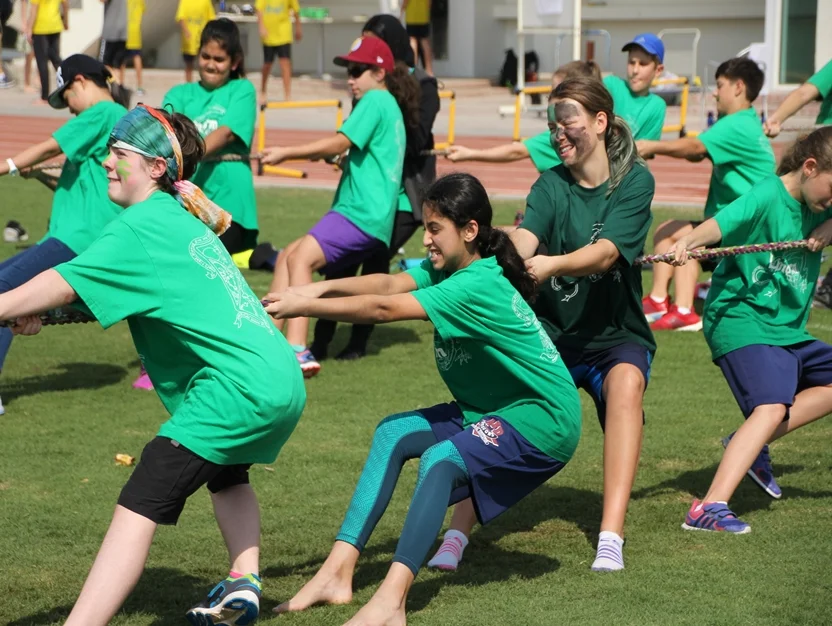
American curriculum schools in Doha often place a strong emphasis on extracurricular life, including sports leagues, performing arts, student clubs and community service programmes, sometimes modelled closely on the kind of after-school culture found at schools in the United States. The range and quality of these programmes varies considerably by school size and facilities, so if extracurricular involvement matters to your family, ask specifically what is on offer for your child's age group and whether additional fees apply for certain activities, sports teams or trips.
Some schools also participate in regional or international school sports and academic competitions, which can be a meaningful part of student life at the secondary level. Ask a school directly about its involvement in any wider school networks or competitive leagues if this is relevant to your child's interests.
Learning support and children with additional needs
The level of learning support, including support for English language learners and for children with identified learning needs, varies significantly between American curriculum schools in Qatar. Some schools have dedicated learning support departments and staff trained to work with a range of needs, while others offer more limited provision or may not be able to accommodate certain needs at all. If your child has an existing diagnosis, individualised education plan, or history of additional support, share this directly and early with any school you are considering, and ask specifically what support is available, whether it carries an additional cost, and how the school's approach compares with what your child has previously received.
School calendar, daily schedule and transport
American curriculum schools in Qatar generally follow an academic year running from around late August to June, structured into semesters rather than the three-term pattern common at British schools, though exact dates vary by school and shift year to year, particularly around dates tied to the Islamic calendar. Ask a school directly for its current calendar if timing your relocation around the start of term matters to you.
Most American curriculum schools in Doha operate a school bus service covering a range of neighbourhoods, generally priced separately from tuition and often set by distance or zone. If you have not yet finalised your housing, it is worth asking a shortlisted school which areas its bus routes currently cover, since this can be a practical factor in deciding where to live, particularly for younger children who may otherwise face a long daily commute. Some schools also offer before- and after-school care programmes for working parents, which can be worth asking about if your relocation involves both parents working full-time from arrival.
Getting a realistic sense of fit
As with any school choice, a school's own marketing material only tells part of the story. Visiting where possible, speaking with current parents, and asking direct questions about class sizes, pastoral care, and how the school supports children joining mid-programme all give a more grounded view. Our guide to how to apply to schools in Qatar sets out the practical admissions steps in more detail.
Documents typically requested when applying
Applying to an American curriculum school in Qatar generally requires a completed application form, recent report cards or transcripts covering the past one to two years, immunisation and health records, and, depending on the school and grade level, a teacher recommendation or reference from the child's current school. For students transferring mid-programme, particularly into the AP years, schools may also ask for a course syllabus or description from the previous school to help assess how coursework already completed maps onto their own curriculum. Because document requirements and any translation or authentication needs vary by school and can take time to arrange, particularly for families relocating from outside their home country, it is worth requesting a full document checklist directly from each shortlisted school as early as possible in your planning.
Relocation timing considerations specific to Doha
Families relocating to Doha for work should be mindful that school admissions timelines and an employer's own relocation and visa processing timeline do not always move at the same pace, and a strong school offer can sometimes arrive well before other logistics, such as housing or a residency permit, are finalised. Where possible, engaging with shortlisted schools before finalising every other detail of the move tends to preserve more options, particularly for grade levels or schools known to fill available places well ahead of the academic year start. If your family's arrival date in Doha is not yet fixed, ask a school directly how much flexibility it has around holding a confirmed place pending final relocation details.
Frequently Asked Questions
Do American curriculum schools in Qatar offer AP courses?
Many do, particularly in the final years of high school, but the specific range of AP subjects varies by school and can change from year to year. If a particular AP subject matters to your family's university plans, ask the school directly whether and when it is currently offered.
What qualification do students get at the end of an American school in Qatar?
Students generally work towards a US-style high school diploma, based on continuous coursework and assessment across the year rather than a single set of final exams, unlike the external examinations used in British or IB systems.
Are American schools in Qatar only for American families?
No, American curriculum schools in Doha generally enrol children of many nationalities. Families choose them for reasons including the diploma structure, AP availability, and university destination flexibility, not only nationality.
How do I know if an American school in Qatar is accredited?
Ask the school directly which accrediting body reviews it and when it was last assessed. Accreditation status is specific to each individual school and can change, so it should not be assumed simply because a school describes itself as American curriculum.
Is admission to American schools in Qatar competitive?
It can be at popular schools and in certain grade levels, particularly around the transition into middle or high school. Applying early and to more than one school in parallel is common practice among relocating families.
Can my child join an American school in Qatar mid-year?
This depends on the individual school and current space in the relevant grade level. Some schools have more flexibility than others, so ask directly and early if your relocation date falls outside the usual academic year start.
How do fees at American schools in Qatar compare to other curricula?
Fees vary by individual school rather than by curriculum type in any consistent way, so it isn't accurate to say American schools are uniformly more or less expensive than British or IB schools. Request each school's current fee schedule to compare directly.
Do American schools in Qatar teach Arabic?
Most private schools in Qatar, including American curriculum schools, include Arabic and Islamic studies for relevant students as part of national education requirements, though the exact hours and structure vary by school. Ask directly if this affects your child's timetable.
International schools in Doha
Get matched with the best school in Qatar
Tell us what you're looking for and we'll recommend the international schools that genuinely fit your family.