Moving to Mexico with Children: A Practical Family Guide
Relocating a family to Mexico usually means juggling school choice, CURP and residency paperwork, neighbourhood and commute decisions, and helping children settle into a genuinely bilingual daily life. Here is a practical walk-through of the pieces.
Quick answer
A practical guide to moving to Mexico with children: schools, CURP paperwork, neighbourhoods, commute, healthcare basics and helping kids settle in.
At a glance
- Country: Mexico
- Sections: 19
- Questions answered: 9
- Read time: 13 min read
Starting the planning process early
Relocating a family to Mexico involves several interlinked workstreams, school selection, visa and residency processes, housing, and helping children adjust, that go more smoothly when planned together rather than tackled one after another. Because school applications and certain administrative steps such as CURP registration can take real time, and because popular schools in destination cities may have limited space at some entry points, most families do best starting the school search and broader planning several months before a planned move date, even while other logistics, such as a visa, are still being finalised.
Choosing a city, or a neighbourhood within one
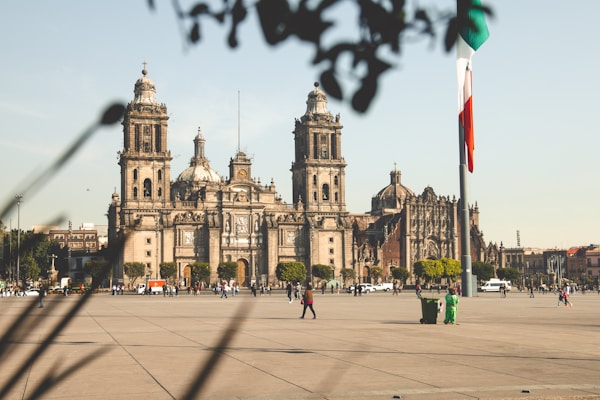
Where in Mexico your family lands has a real effect on the breadth of school choice available. Mexico City offers by far the widest range of private schools across every curriculum family, with meaningful options also in Monterrey and Guadalajara. Coastal or smaller cities such as Cancún or Mérida have fewer options and a narrower range of curricula, so if your employer or circumstances give you a choice of city, it's worth researching school availability as part of that decision rather than assuming a similar range everywhere.
Within a large city, particularly Mexico City, choosing a neighbourhood often becomes intertwined with school choice, since commute time and school location are significant factors for many expatriate families.
Choosing a neighbourhood around school and commute
In Mexico City especially, traffic and commute times can be substantial, and many expatriate families find that choosing housing close to their child's school, or along a manageable commute route, meaningfully affects daily quality of life more than it might in a smaller or less congested city. Many schools operate structured transport services with defined routes and pickup points, which can widen your realistic housing options beyond only the immediate area around a school, so ask a shortlisted school directly what transport routes it currently runs and whether your likely neighbourhood is covered.
Security considerations also factor into neighbourhood decisions for many relocating families; speaking with your employer's relocation support, if available, or with other expatriate families already living in your destination city, is a sensible way to get a grounded, current picture rather than relying on general impressions.
Understanding the school landscape before you commit to housing
Because school choice and housing choice are so linked in Mexico, it's worth having at least a working shortlist of schools in mind before finalising a housing decision, rather than choosing a home first and hoping suitable schools are nearby. Our international schools guide is a good starting point for understanding how the Mexican school system works and what to look for.
CURP, residency and other paperwork for the family
Enrolling a child in a SEP-incorporated school generally involves obtaining a CURP (Clave Única de Registro de Población) and, for children who have previously studied outside Mexico, completing a revalidación de estudios to have that prior schooling formally recognised. These processes are tied in various ways to the family's broader immigration and residency status, so it's worth coordinating your visa or residency process with your school application timeline rather than treating them as entirely separate tasks. Our how-to-apply guide covers this paperwork in more detail, including what a school's admissions office can typically help coordinate.
Budgeting for school and the wider cost of relocating
Beyond tuition itself, which in Mexico is generally structured around an inscripción or reinscripción charge plus colegiatura paid across ten monthly instalments, families should budget for uniforms, books, transport, and often language support if a child is arriving with limited Spanish. It's also worth building a wider household budget that accounts for housing, healthcare arrangements, and the general cost of settling in, rather than focusing on school costs in isolation. Our fees guide breaks down the typical components of Mexican private school fees in more detail.
Helping a child adjust to a bilingual daily life
Because Spanish-English bilingual schooling is the mainstream private model in Mexico, most relocating children will encounter meaningful Spanish exposure even at a strongly internationally oriented school, which can be a genuine long-term advantage but also a real adjustment in the early months, particularly for a child arriving with little or no Spanish. Simple steps outside school, such as Spanish-language children's media, casual conversation practice with Spanish-speaking neighbours or activity leaders, and patience with an initial period of quietness or frustration as a child adapts, can meaningfully support the transition alongside whatever formal language support the school provides. Our bilingual schools guide explains what different levels of language exposure look like at different schools.
Healthcare basics to arrange before or soon after arrival
Most relocating families arrange private health insurance covering the family in Mexico, whether through an employer relocation package or independently, and it's worth doing this before arrival or very soon after so that routine paediatric care, and coverage in case of an urgent issue, is in place from the start. Mexico City and other large cities have well-regarded private hospitals and paediatric care, but confirming your insurance's network and how it works for children specifically, including for routine check-ups and vaccinations that may be requested for school enrolment, is worth doing early.
Not sure which schools fit your family?
Choosing an international school depends on your child's age, curriculum preference, location and budget. Tell us what you're looking for and we'll help you identify schools worth considering.
Timing the move around the school calendar
Because most SEP-incorporated schools follow an academic year running from August into summer, timing your move to coincide with the start of that school year generally gives your child the smoothest start, joining alongside new classmates rather than partway through material already covered. Our term dates guide explains how the Mexican school calendar works and how to plan around it if a mid-year move is unavoidable.
Supporting older children and teenagers through the move
Older children and teenagers often experience an international move differently from younger siblings, sometimes with more resistance around leaving established friendships or, for teenagers approaching university applications, real concern about how a change of school and curriculum affects their academic trajectory. Involving older children in aspects of the decision where practical, being honest about what is and isn't yet certain, and connecting them with a prospective school's current students ahead of the move, where a school can facilitate this, can help ease this particular age group's transition.
Building a support network as a family
Many expatriate families in Mexico's larger cities find real value in connecting with established expatriate community groups, whether nationality-specific associations, school parent networks, or broader international family groups, both for practical advice and for helping children build friendships beyond the school gate. Ask a shortlisted school whether it can connect you with other recently arrived families, and consider looking into local expatriate community groups relevant to your family's background well before or soon after arrival.
Settling in during the first school term
The first term at a new school in a new country is generally the most demanding adjustment period, for children and parents alike, given the combination of a new language environment, new social dynamics, and often an unfamiliar school calendar and academic rhythm. Staying closely engaged with the school during this period, attending orientation events, and maintaining open, direct communication with teachers about how your child is adjusting academically and socially will help identify and address any issues early, rather than assuming things will naturally resolve on their own.
A realistic first-year outlook
Most families relocating to Mexico with children find that the first year involves a genuine adjustment curve, with schools, language and social life all settling gradually rather than immediately, and that by the second year most of the practical logistics feel considerably more manageable. Keeping this realistic timeline in mind, rather than expecting an instant smooth transition, can help manage expectations for the whole family during what is often, alongside its challenges, also a genuinely rewarding move.
A month-by-month relocation timeline
A workable scaffold for a family relocating around an August school start might run: six to nine months out, research cities, neighbourhoods and schools in parallel, and begin visa planning; four to six months out, shortlist and contact schools, arrange visits, and start gathering documents for CURP and revalidación de estudios; two to four months out, finalise school applications, secure housing near a workable commute, and arrange health insurance; and in the final weeks, complete orientation steps, uniform and material purchases, and confirm moving logistics. Adjust this scaffold to your own visa timeline and employer support, but having a rough sequence in mind from the outset generally reduces last-minute scrambling.
A pre-move checklist for families with children
Practical items to work through before departure
- Copies of medical and immunisation records, and a plan for continuity of any ongoing care
- Confirmed school place, deposit paid, and orientation dates noted
- Housing secured with a realistic understanding of commute to school
- Private health insurance arranged and active before or very soon after arrival
- Age-appropriate conversations with children about what to expect and what will and won't change
- Contact established with the school or other expatriate families ahead of arrival where possible
Beyond the school-specific paperwork covered elsewhere in this guide, it's worth working through a broader family checklist before departure, covering healthcare continuity, document copies, and simple steps to prepare children emotionally for the move rather than only logistically.
Caveats worth keeping in mind
It's worth being realistic that no amount of planning entirely smooths an international move with children, and that individual children, even siblings, can react quite differently to the same relocation. A plan that works well for a confident, adaptable child may need real adjustment for a sibling who finds change harder, and it's fine to move more gradually on some fronts, such as extracurricular commitments outside school, while the family settles in generally.
Setting up daily logistics beyond school and housing
Alongside the bigger decisions around school and neighbourhood, a number of smaller daily logistics are worth arranging early, including a local phone plan, a bank account suited to paying school fees and everyday expenses, and reliable transport arrangements if you won't be relying on a school bus service. Many of these steps depend on having a CURP or residency documentation in place, so sequencing them alongside your visa and school paperwork, rather than as an afterthought once your child has already started school, generally reduces friction in the first few weeks.
Managing expectations around pets and other family logistics
Families relocating with pets, older relatives, or other specific circumstances beyond the core school and housing decisions should factor these into the same overall relocation timeline rather than treating them as entirely separate projects, since practical constraints such as pet import requirements or suitable housing for a multi-generational household can influence which neighbourhoods and, in turn, which schools are realistically workable. Raising these constraints early with your employer's relocation support, if available, or with a relocation agent, helps avoid a late-stage conflict between, for example, a preferred school's neighbourhood and housing that accommodates the whole family's needs.
Building a support network in your first term
Arriving families often underestimate how much of a child"s settling-in depends on the adults around them finding their own footing. Most international and bilingual schools in Mexico run parent associations, class representatives or welcome groups, and these are usually the fastest route into practical local knowledge: which after-school clubs are worth the commute, how weekend sport is organised, which neighbourhoods other families in your child"s year live in, and who to ask when something confusing comes up mid-term. Introduce yourself to your child"s form tutor or class teacher early rather than waiting for the first scheduled parents" evening, and ask the school directly how it pairs new arrivals with existing families. A child who has one reliable friendship and one trusted adult at school in the first few weeks usually adjusts far more smoothly than one whose parents wait for the school to initiate contact, and the same is true for parents adapting to a new city.
Frequently Asked Questions
How far in advance should we start planning a move to Mexico with children?
Ideally several months ahead, since school applications, CURP registration and, where relevant, revalidación de estudios can all take time and are easier to coordinate together than tackled separately close to your move date.
Should we choose housing or a school first?
Most families do best having a working school shortlist before finalising housing, since commute and neighbourhood decisions in Mexico's larger cities are closely tied to school location.
Is Mexico City the best place to relocate for school options?
It has by far the widest range of schools and curricula, with meaningful options also in Monterrey and Guadalajara. Smaller cities and coastal regions generally offer fewer options.
Will my child need to learn Spanish quickly?
Given how mainstream bilingual schooling is, most children will encounter real Spanish exposure even at internationally oriented schools. Younger children generally adjust to conversational Spanish faster than academic Spanish.
What paperwork do we need to enrol a child in school?
Commonly a CURP and, for children who studied abroad, a revalidación de estudios, alongside standard documents such as birth certificates, passports and school records. Requirements can vary by school and immigration status.
How should we budget for the move beyond school fees?
Factor in housing, private health insurance, transport, and possible language support alongside standard school costs like inscripción, colegiatura, uniforms and books.
When is the best time of year to move for school purposes?
Arriving close to the start of the SEP academic year, generally in August, tends to give the smoothest transition, though established schools often accept mid-year entries where space allows.
How can we help a teenager adjust to the move?
Involve them in aspects of the decision where practical, be honest about uncertainties, and ask a prospective school if it can connect your teenager with current students before the move.
How long does it typically take a family to feel settled in Mexico?
Many families describe a genuine adjustment curve through the first year, with things generally feeling considerably more settled by the second year, though this varies by family.
International schools in Monterrey
International schools in Mexico City
International schools in Guadalajara
International schools in Cancun
International schools in Puebla
Get admissions help for Mexico
Deadlines, entrance tests and paperwork — tell us where you are in the process.