A Parent's Guide to International Schools in Indonesia
Indonesia's international school market spans large, established Jakarta campuses and a smaller, more eclectic Bali scene. Here's how the system actually works, what categories of school exist, and how to think about the decision as a relocating parent.

Quick answer
How international schools in Indonesia are categorised, who can enrol, and how Jakarta and Bali options differ, for parents planning a move.
At a glance
- Country: Indonesia
- Sections: 17
- Questions answered: 9
- Schools listed: 7
- Read time: 13 min read
What counts as an international school in Indonesia
In Indonesia, the label 'international school' is used loosely in everyday conversation, but there is an important formal distinction to understand behind it. Schools that are legally permitted to teach a foreign curriculum and admit both foreign and Indonesian passport holders generally fall under a specific licensing category set by the Indonesian Ministry of Education, often referred to as SPK, short for Sekolah Penyelenggara Pendidikan Kerja Sama, which translates roughly to 'cooperation-based education provider school'. This is a genuinely distinct legal category from an ordinary national school and from schools that operate purely as foreign-curriculum schools for foreign passport holders only.
The practical effect for parents is that not every school marketing itself as 'international' has the same status, the same rules on who it can enrol, or the same requirements for Indonesian-citizen students. Before shortlisting a school, it is worth asking directly what its official licensing status is and confirming this matters to your family's situation, especially if any of your children hold Indonesian citizenship alongside another passport.
Rules on enrolling Indonesian nationals versus foreign passport holders
Indonesian regulation has historically drawn a line between schools that may enrol only foreign nationals and SPK-status schools that are permitted to admit Indonesian citizens as well, subject to specific conditions. These conditions have included requirements around the proportion of Indonesian nationals in a cohort and, importantly for curriculum planning, requirements that Indonesian-citizen students receive instruction in Indonesian language, civics (Pancasila) and religious education alongside the school's main foreign curriculum.
Because these rules are set by national regulation and have been amended over time, this guide will not state the current specific thresholds or percentages as fact. If your household includes a child with Indonesian citizenship, or dual nationality, this is one of the first and most important things to clarify directly with any school you are considering, since it can affect both eligibility and the shape of the weekly timetable your child will follow.
Curricula on offer across Indonesia
The international school sector in Indonesia includes schools following the International Baccalaureate programmes, British curriculum schools working towards IGCSEs and A-levels, American curriculum schools offering a US-style high school diploma and sometimes Advanced Placement subjects, and a number of national-curriculum schools associated with specific expatriate communities, such as Japanese, Korean, German and French schools serving those communities in Jakarta.
Many larger schools, particularly in Jakarta, also offer the IB Diploma Programme as an exit qualification even where the earlier years follow a British or American-influenced approach, so it's worth asking a school directly which specific programmes and exam boards it uses at each stage, rather than assuming a single curriculum label applies uniformly from early years through to graduation.
Jakarta versus Bali: two very different markets
Jakarta is by far the larger and more established international school market in Indonesia, reflecting its role as the country's business and diplomatic capital and the concentration of long-term expatriate families and multinational employers there. The city has a substantial number of long-running international schools with large campuses, established boards, and decades of accreditation history, spanning British, American, IB and various national curricula.
Bali's international school scene is smaller and has a distinctly different character, shaped heavily by a mix of long-term expatriate residents, remote-working families and a strong environmental and alternative-education identity at some schools, most visibly at schools built around sustainability and experiential learning. Families relocating to Bali for work in tourism, hospitality or as digital nomads will generally find fewer schools to choose from than in Jakarta, and it is worth researching each Bali school's specific philosophy carefully, since the range of educational approaches on offer varies more widely there than the more conventional academic model that dominates in Jakarta.
Accreditation and quality signals to check
Beyond a school's licensing category, it is worth checking a school's accreditation status with recognised international bodies relevant to its curriculum, such as the Council of International Schools, the International Baccalaureate Organisation for IB schools, or the relevant examination board for British or American curriculum schools. Accreditation is not a guarantee of fit for your particular child, but it does indicate that a school has been through an external review process against recognised standards.
It's also worth asking schools directly about staff turnover, particularly among senior leadership, since long-running Jakarta schools sometimes have more staffing stability than newer campuses, though this varies and should always be checked with the specific school rather than assumed from its size or age.
School size and campus facilities
Established Jakarta schools often occupy large, purpose-built campuses with extensive sports facilities, performing arts spaces, science laboratories and, in some cases, boarding-adjacent facilities for older students. Smaller schools, and many in Bali, operate on more modest campuses, sometimes across multiple sites, and facilities can be a genuine differentiator worth visiting in person before committing.
Class sizes and overall school population also vary considerably, from large multi-thousand-student campuses in Jakarta to much smaller, more intimate schools elsewhere. Neither model suits every family; some parents specifically look for a smaller community feel, particularly for younger children settling into a new country, while others value the breadth of activities and specialist teaching that a larger school can offer.
Language of instruction and additional language support
Most schools marketed as international teach primarily in English, though many also offer Indonesian language classes for non-native speakers and, at some schools, additional foreign languages such as Mandarin, French or Japanese. If your child does not yet speak English fluently, ask a school directly what English-as-an-additional-language support it offers, how it is structured, and whether it is included in standard tuition or charged separately.
For families who want their children to maintain strong Indonesian language skills, whether for cultural connection or because of Indonesian citizenship in the family, some schools offer more substantial Indonesian language and cultural programmes than others, and this is worth discussing directly with each shortlisted school.
Not sure which schools fit your family?
Choosing an international school depends on your child's age, curriculum preference, location and budget. Tell us what you're looking for and we'll help you identify schools worth considering.
Religious education and cultural considerations
Indonesia is religiously diverse, and schools vary in how they approach religious education. Some schools are secular in orientation and offer a general or comparative approach to religious and moral education, while others have a specific religious affiliation or, particularly for schools admitting Indonesian nationals under SPK status, a requirement to provide religious instruction aligned with each student's faith as mandated by national regulation.
It's worth asking a school directly how it approaches religious education in practice, since expectations and provision can differ meaningfully between an international school built primarily for a Western expatriate community and one with a larger proportion of Indonesian national students.
How to start narrowing down your shortlist
A sensible starting point is to define your non-negotiables: curriculum continuity with your child's previous school, city (since Jakarta and Bali serve very different family circumstances), budget, and any specific need such as additional learning support or a particular religious or language provision. From there, build a shortlist of perhaps four to six schools and request a school visit, prospectus and current fee schedule from each.
Our guide to applying to schools in Indonesia goes into the practical steps of the admissions process itself, including the documents schools commonly ask for and realistic timelines to plan around.
Waiting lists and popular schools in Jakarta
Some of Jakarta's longest-established international schools are in strong demand among relocating families, and it is not unusual for popular year groups at well-known schools to have waiting lists at certain points in the academic cycle. This varies by school, by year group and by year, so it is not something this guide can state as a fixed rule, but it is worth applying as early as possible once your relocation is confirmed, rather than waiting until you have arrived in the country, particularly if you have a preferred school in mind.
Boarding and semi-boarding options
Full boarding is uncommon among Indonesia's international schools compared with some other countries in the region, though some schools offer limited boarding or homestay-style arrangements for older students, particularly those from other parts of Indonesia attending a Jakarta school away from their family home. If boarding matters to your family's plans, confirm directly with a school whether it offers anything of this kind, since it is far from a standard feature across the sector.
Special educational needs and inclusion
Provision for special educational needs varies considerably between schools in Indonesia, from schools with dedicated learning support departments and trained specialist staff to schools with little formal capacity to support additional needs. If your child has a diagnosed learning difference or additional need, raise this directly and specifically with each shortlisted school as early as possible in your planning, since capacity can be limited and not every school will be able to offer the same level of support.
University pathways and exit qualifications
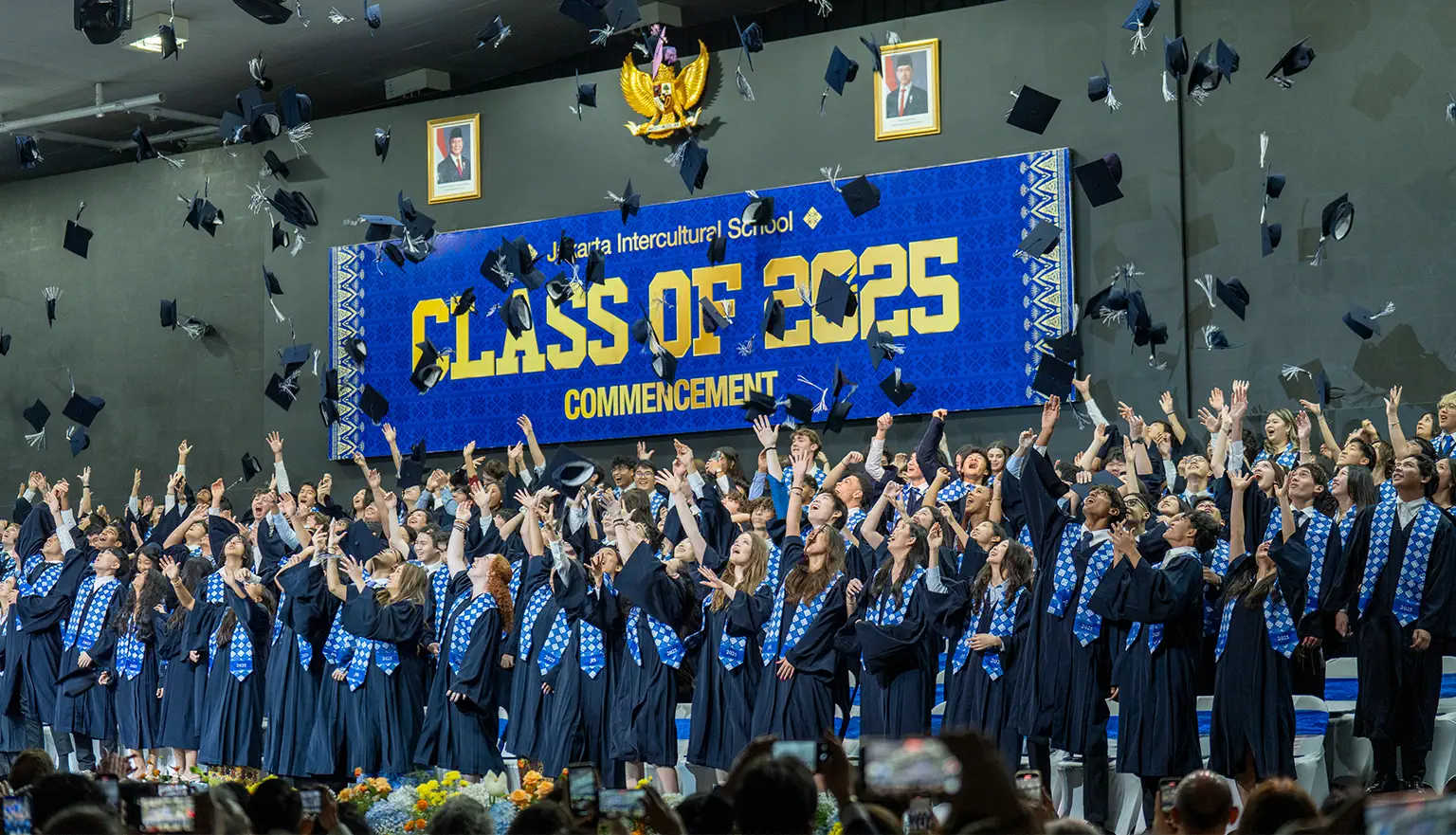
Indonesia's international schools generally prepare students for the same range of exit qualifications you would expect elsewhere in the region: the IB Diploma, British A-levels or the equivalent, and the US high school diploma, sometimes with Advanced Placement subjects. Graduates from established international schools in Jakarta commonly go on to universities in the UK, US, Australia, Singapore and elsewhere, alongside a smaller number who choose to continue into Indonesian higher education. Ask a school for anonymised university destination data if this matters to your family's long-term planning, since this is something well-established schools generally track and can share.
Comparing curricula before you decide
If you are not already committed to a specific curriculum because of a previous school or a planned future move, it's worth comparing the IB, British and American options available to you specifically in the city you are moving to, rather than in the abstract, since the actual schools available in Jakarta or Bali may narrow your realistic choices more than a general curriculum comparison would suggest. Our guides to IB, British and American curriculum schools in Indonesia go into more detail on how each works in the Indonesian context.
- IB schools in Indonesia
- British curriculum schools in Indonesia
- American curriculum schools in Indonesia
Visiting schools before you commit
Wherever possible, visit shortlisted schools in person, or arrange a video tour and call with admissions staff if you are still overseas at the time of shortlisting. Photos and websites rarely convey the atmosphere of a school, the way teachers interact with students, or the practical realities of a commute during Jakarta traffic, which can be a genuinely significant factor in daily life for families choosing between campuses in different parts of the city.
Where to go from here
Once you have a shortlist, the next practical steps are understanding realistic fee levels, the documents an application will require, and how the Indonesian academic year is structured so you can plan a move around it. The related guides linked throughout this page cover each of these in more depth, and our country hub for Indonesia brings all of them together in one place.
A decision framework for narrowing a long list of schools
With Indonesia's international school sector spanning multiple curricula, cities and price points, it helps to filter in a consistent order: first by city, since Jakarta and Bali serve genuinely different circumstances; then by curriculum continuity with your child's previous school or likely future moves; then by budget, ruling out schools clearly outside your range; and only then by softer factors such as campus facilities, school size and philosophy. Applying filters in this order tends to produce a manageable shortlist faster than trying to weigh every factor simultaneously from the outset.
Frequently Asked Questions
What does SPK status mean for a school in Indonesia?
SPK (Sekolah Penyelenggara Pendidikan Kerja Sama) is a licensing category that permits a school to teach a foreign curriculum and, subject to conditions set by regulation, admit Indonesian citizens alongside foreign passport holders. Ask a school directly about its licensing status if this affects your family.
Can my Indonesian-citizen child attend an international school?
This depends on the specific school's licensing status and current regulatory conditions, which can include requirements for Indonesian language, civics and religious instruction. Confirm directly with each school rather than assuming eligibility.
Is Jakarta or Bali better for international schooling?
It depends entirely on where your work and family circumstances take you. Jakarta has a larger, more established market with more schools and curricula to choose from; Bali has a smaller, more varied scene with a strong presence of alternative and environmentally focused schools.
Do Indonesian international schools follow one main curriculum?
No. The market includes IB, British, American and several national-curriculum schools serving specific expatriate communities. Check which programmes a specific school offers at each stage rather than assuming a single approach.
Are class sizes generally small in Indonesia?
This varies significantly by school and campus size, from large, well-resourced Jakarta campuses to smaller schools elsewhere. Ask a specific school for its current class size and student-to-teacher ratio.
How early should we apply to a popular Jakarta school?
As early as possible once your relocation is confirmed. Some well-known schools see strong demand for particular year groups at certain times, though this varies by school and year, so early contact is the safest approach.
Do international schools in Indonesia offer boarding?
Full boarding is uncommon, though some schools offer limited boarding or homestay arrangements for older students. Confirm directly with a school if this matters to your plans.
What language is used for teaching?
The great majority of international schools teach primarily in English, with Indonesian and other languages typically offered as additional subjects. English-as-an-additional-language support varies by school.
How do we check a school's accreditation?
Ask the school directly which accrediting bodies it holds recognition from, such as the Council of International Schools or the IB Organisation, and confirm this is current rather than historic.
International schools in Jakarta
- Jakarta Intercultural School
- British School Jakarta
- Jakarta International School (JIS)
- Sekolah Pelita Harapan
International schools in Bali
Browse international schools in Indonesia
See every school we list in Indonesia, with fees, curricula and contact details.